Developer Tools
100 stories in this blend
 Superintelligence·1d ago
Microsoft Releases Lower Cost Coding Model MAI-Code-1.1-Flash
Microsoft AI has launched MAI-Code-1.1-Flash, an updated compact coding model that powers GitHub Copilot. The company reports the model improves token efficiency by 25% and handles command line and .NET programming tasks faster at lower operational costs.
 The Neuron·1d ago
Pocketty
Pocketty is a mobile application for iOS devices designed to manage remote server connections and software alerts. It allows administrators to monitor secure command line sessions and receive real time updates on automated agent activities. The app is best suited for system administrators and developers managing remote networks.
 Superintelligence·2d ago
OpenAI engineers explain why task completion cost matters more than token prices
In a technical session, engineers from OpenAI explained why advertised token prices can be misleading for developers building AI workflows. A model with low per token fees can end up costing more overall if it requires excessive reasoning steps or fails tasks that demand human correction. They recommended methods to minimize total spend, such as using deferred batch requests and adjusting effort parameters.
 The Neuron·2d ago
Moxie
Moxie is a Mac menu bar utility that lets developers use OpenAI, Gemini, and DeepSeek models inside Anthropic's Claude Code command line tool. It helps technical users switch accounts automatically when hitting API rate limits.
 There's An AI For That·3d ago
HyperFrames
HyperFrames converts written prompts directly into finished MP4 video files inside code editors. The open source tool allows developers to render video content locally without external rendering services.
 Superhuman·3d ago
Cloudflare Web Search API
A developer API that provides artificial intelligence models and automated workflows with live web data. It enables software builders to keep chatbot answers and search applications up to date with accurate online information.
 The Neuron·3d ago
Rill Browser
A developer tool that transfers web page context straight into AI coding assistants like Claude Code and Codex. It helps engineers eliminate manual copy and paste tasks when working with web references.
 Staying Ahead·4d ago
Cubicle visual dashboard for coding agents
Cubicle provides a pixel-art virtual office interface that monitors autonomous coding agents in real time. It operates locally in read-only mode, letting developers watch agent background activities without giving the tool permission to alter project files.
 Staying Ahead·4d ago
Crowny MacBook notch notifications for coding assistants
Crowny routes status updates and alerts from coding models directly into the MacBook screen notch. It is designed for developers running multiple background assistants simultaneously who need quick visibility on which process requires user intervention.
 There's An AI For That·Oct 1
Nango
An integration tool for software developers that connects AI agents with over 1,000 application programming interfaces. It automates credential management, data synchronization, and event triggers across software systems.
 AI Daily Brief·Oct 1
Codex CLI
Codex CLI is an upgraded command line application featuring interactive session history and task management controls. Software developers can use dedicated terminal commands to track and switch between concurrent agent operations.
 AI Daily Brief·Oct 1
Codex Cloud Environments
Codex Cloud Environments give software projects dedicated online infrastructure to run coding tasks autonomously. Programmers can keep agent workflows active in the cloud after powering down their personal hardware.
 The Neuron·Sep 30
InstaCloud
InstaCloud provides serverless execution environments designed specifically for autonomous programming tools. It gives AI coding agents command line access to databases, hosting environments, and deployment tools.
 The Neuron·Sep 30
OpenResearch
OpenResearch is an open source framework that turns software assistants into scientific experiment engines. It creates isolated workspace branches and tracks experiment progress through immutable structured logs.
 Superhuman·Sep 29
VerifyAX
A evaluation platform that tests autonomous AI agent behavior across simulated real world environments. It helps technical teams identify operational errors and establish guardrails prior to public deployment.
 Staying Ahead·Sep 28
OpenAI Sandbox Agents
This developer feature provides secure Unix environments for autonomous agents to run commands, store files, and maintain long running sessions. It helps software builders evaluate and execute code generated by AI models without risking local system integrity.
 The Neuron·Sep 28
Clueso MCP
An assistant plugin that lets chatbot models generate and modify documentation, software walkthroughs, and training videos through plain chat text. Outputs remain editable for easy ongoing updates.
 The Neuron·Sep 27
Docker Cloud Sandboxes
Docker introduced cloud sandbox environments that let automated coding agents shift tasks from local computers to remote cloud infrastructure. Programmers can initiate coding tasks locally and keep them executing in the cloud after powering down their laptops.
 The Neuron·Sep 27
FrontierAgent by Apodex
FrontierAgent is an open source agent engine designed to execute tasks directly inside software code, local files, and datasets. It allows autonomous systems to verify outputs and adjust actions mid run without needing complex container software.
 There's An AI For That·Sep 26
AxioRank
AxioRank inspects API calls made by software agents to block leaked credentials, destructive shell commands, and prompt injection attempts. It fits security teams that need control and visibility over autonomous AI agent deployments.
 Staying Ahead·Sep 25
Anthropic offers cloud computing credits for developer tool
Cloud session capabilities for Claude Code have transitioned out of preview status. Users can claim up to 250 dollars in free credits before October 7 depending on their subscription tier.
 The Neuron·Sep 25
Cursor Rollouts
A deployment monitoring utility integrated into the Cursor code editor to watch live software releases. The tool detects performance issues, flags errors, and can automatically pause releases or initiate rollbacks.
 The Neuron·Sep 25
Google Antigravity SDK
A developer toolkit designed to execute autonomous agent logic locally using compact open language models. It enables software engineers to build privacy focused applications that run without active cloud dependencies.
 There's An AI For That·Sep 24
MongoDB Model Context Protocol Server
MongoDB MCP Server supplies AI coding tools with live database schemas, sample collections, and configuration details. It links local, Atlas, and enterprise database deployments to coding assistants like Cursor, Claude Code, and Copilot.
 The Neuron·Sep 24
Voice Control Interface for Command Line Coding Agents
CNVS allows software developers to manage multiple terminal agent sessions using voice commands on Mac computers. It suits engineers who coordinate several concurrent AI tools without switching focus manually.
 The Neuron·Sep 24
Integrated Stack for Mobile Automation Development
Qwen released a toolkit that combines path planning, mobile interaction, and asset creation into a single package. It is designed for developers building and evaluating automated mobile agent workflows.
 There's An AI For That·Sep 22
Vibe Key
A physical aluminium controller featuring configurable buttons and a rotary knob designed to trigger voice inputs and shortcuts while collaborating with software agents.
 Superhuman·Sep 22
SpaceXAI unveils Grok 4.7 with upgraded work capabilities
SpaceXAI introduced Grok 4.7, an updated AI model designed for extended reasoning and document generation tasks. The model keeps existing speed and pricing structures while improving self verification accuracy and complex workspace tasks. Access is available immediately across Cursor, Grok Build, and developer API endpoints.
 The Neuron·Sep 22
Cloudflare Python Workers
A serverless execution environment that runs Python web frameworks and AI libraries at the network edge. It allows developers to deploy backend code directly without needing JavaScript translation layers.
 There's An AI For That·Sep 21
xAI Launches Grok 4.7 with Extended Task Endurance
xAI has released Grok 4.7, designed to maintain focus and accuracy during multi-hour complex assignments. The updated model features enhanced self-verification capabilities to prevent premature completion on long agent workflows. It comes with native integration for Grok Bot and updated safety measures across API and developer environments.
 The Neuron·Sep 21
HyperProbe
HyperProbe gives AI coding assistants real-time visibility into active application variables without requiring new logging code or system redeployments. Software engineers can use the tool to accelerate live application debugging during outages.
 The Neuron·Sep 21
Claude Code expands support for universal project instruction files
Anthropic updated Claude Code to support standardized AGENTS.md instruction files whenever dedicated CLAUDE.md files are missing from a repository. The update allows development teams to maintain consistent agent behavior rules across different coding tools.
 There's An AI For That·Sep 19
MoniD
MoniD provides an integration hub that connects autonomous AI agents to thousands of external tools and software services. Developers can use it to control API routing and extend agent capabilities across different vendors.
 There's An AI For That·Sep 18
AgentGit
AgentGit records coding agent sessions to facilitate sharing and continuation of software tasks. It preserves instructions, tool calls, and model reasoning so other developers can take over seamlessly.
 Staying Ahead·Sep 18
Jev by TypeSafe
A fast decision making model that bypasses traditional text generation to output instant structural decisions. It suits developers and system architects who need extremely rapid context evaluations without heavy computational delay.
 Staying Ahead·Sep 18
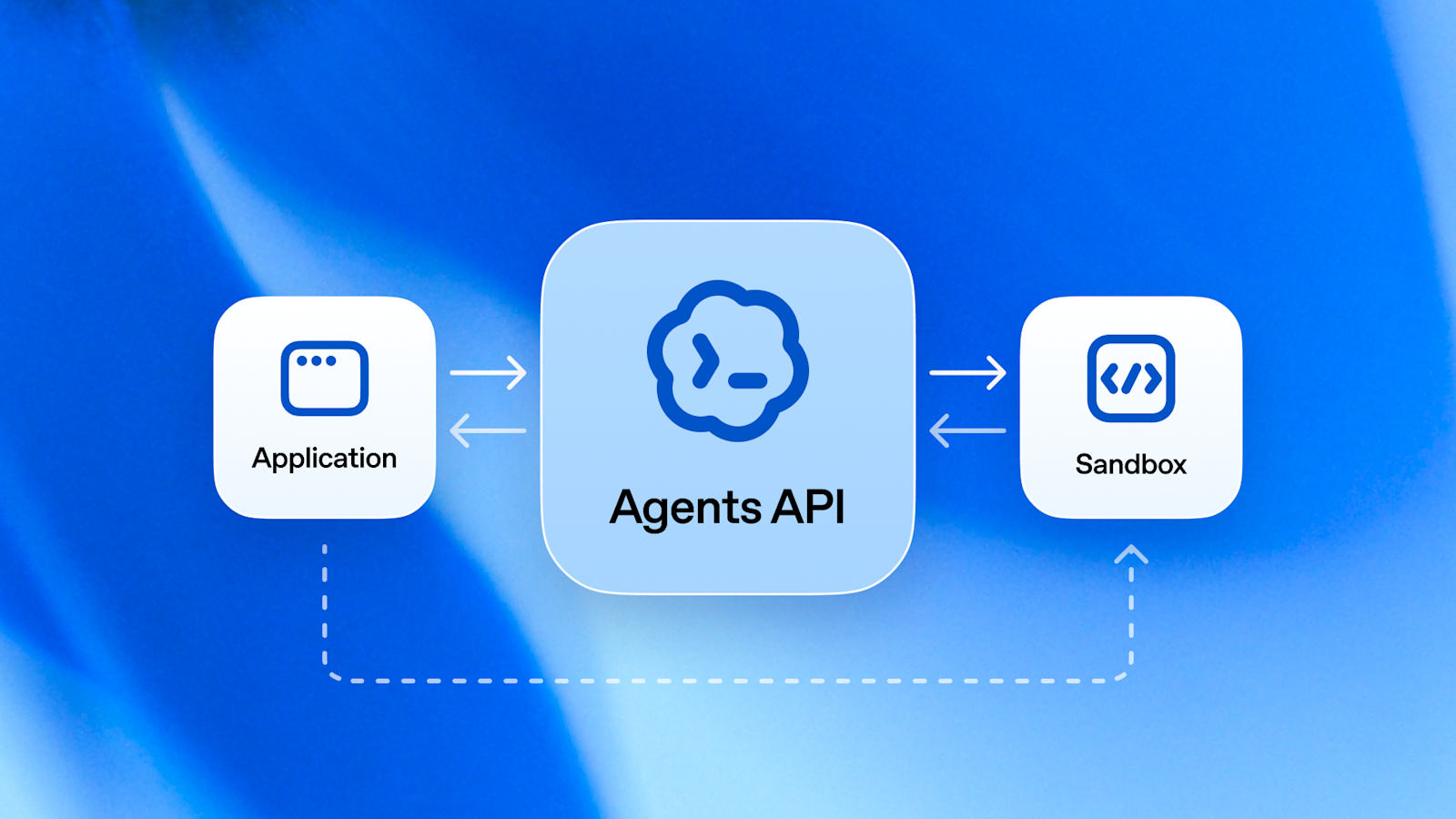
OpenAI releases developer toolset for managing automated agents
OpenAI opened access to its Agents API, enabling software developers to build and run autonomous tools. The platform handles background sessions, tool execution, and system recovery based on the architecture powering Codex.
 There's An AI For That·Sep 17
Since.dev
Automated maintenance tool that monitors third party software dependencies, identifies breaking changes, and generates code fixes. Software teams can inspect proposed updates through pull requests before applying them to production codebases.
 There's An AI For That·Sep 17
Friday Memory
Open source memory layer designed for AI programming agents to store and retrieve historical context across project sessions. It visualizes links between past development decisions inside an interactive browser interface.
 AI Daily Brief·Sep 17
Jev probability engine
Jev is a specialized model that outputs exact probability scores instead of generating text responses. It suits software developers building automated routing rules, quality checks, and real time decision pipelines.
 Superintelligence·Sep 16
Predictable Decision Engine for Software Workflows
TypeSafe launched Jev, a specialized decision model designed to supply software applications with instant structured choices and confidence ratings. The system restricts output to developer-defined options to streamline routine operations like customer service routing.
 The Neuron·Sep 16
OpenArtifacts
A public platform that allows autonomous coding agents to render and publish interactive Web files or document layouts. It helps developers inspect live HTML outputs generated by terminal agents inside a standard browser.
 There's An AI For That·Sep 14
Cheshi
An open source digital worker that scans codebases to maintain contextual understanding across files and developer applications. It works well for software engineers needing autonomous workspace management.
 Staying Ahead·Sep 14
Juggler Visual Desktop Workspace for Coding Agents
Juggler is an open source graphical interface for AI software generation that replaces standard command line interactions with interactive document trees. It allows developers to fork code conversations and backtrack through history while utilizing their existing API access for popular models.
 Staying Ahead·Sep 14
Agent Manager Terminal Dashboard for Multi-Agent Workflows
Agent Manager is a command line console that displays all active coding sessions across different model engines in a single interface. Software engineers can initiate new agent instances using plain text and leave inline review feedback directly on code diffs.
 Staying Ahead·Sep 14
Termic Side by Side CLI Environment for Git Repositories
Termic is a free desktop tool designed to execute multiple command line AI coding tools concurrently within isolated git worktrees. This approach prevents concurrent agents from editing the same files or creating merge conflicts while operating on direct subscription plans.
 The Neuron·Sep 14
Naseem
A desktop application for macOS that allows an automated agent to run command line tools, manage files, and control developer simulators. It prompts the user for manual approval before making any system modifications.
 The Neuron·Sep 14
Onset
An automated development tool that generates structured product updates from completed code changes. Once created, the software posts the updated release notes directly to designated Slack channels.
 AI Daily Brief·Sep 12
SWE-2
A streamlined coding model focused strictly on software development tasks at a significantly reduced operating cost. It suits engineering teams looking to automate routine code generation while maintaining tight control over compute expenses.
 The Neuron·Sep 11
OpenAI Agents API
OpenAI Agents API gives developers infrastructure to build persistent cloud agents using automated context compression, tool orchestration, and multi-agent management through a unified interface.
 The Neuron·Sep 10
pstack
pstack is an extension for the Cursor code editor that incorporates context management and code verification routines directly into software projects. It helps programmers organize multi model development workflows and maintain structured context.
 The Neuron·Sep 10
Harden
Harden is a desktop security tool that monitors and verifies local system calls made by autonomous coding assistants before execution. It helps developers protect their machines against unintended command execution during automated coding workflows.
 The Neuron·Sep 10
Desert Ant Labs
Desert Ant Labs provides a suite of 18 compact models for processing speech, text, and visual inputs directly on client devices. It benefits mobile and web developers building private application features with lightweight native SDKs.
 The Neuron·Sep 9
I Have ADHD
A specialized prompt skill designed for Claude and coding agents that eliminates wordy intro paragraphs and forces direct solutions. It suits software engineers seeking fast, fluff free technical answers during development.
 The Neuron·Sep 8
Olostep
A web scraping API that turns website content into clean data structures tailored for AI agents. It automatically manages proxies, CAPTCHA challenges, and page extraction for developers building web automated tools.
 TAAFT - There's An AI For That·Sep 7
VS Code Agents
An extension for Visual Studio Code that plans programming tasks, modifies source files, executes terminal commands, and validates output. It supports parallel execution tracks for developer workflows.
 Vaibhav Sisinty·Sep 7
htmx 4.0
htmx is a web development library that enables interactive user interfaces directly through HTML attributes without full frontend JavaScript frameworks. Version 4 updates the core engine to use standard fetch calls while preserving existing syntax.
 Vaibhav Sisinty·Sep 7
Polars 2.0 Release Candidate
Polars is a fast data processing library for Python and Rust built on an optimized query engine. The 2.0 release candidate switches default queries to a streaming mode to significantly reduce memory usage on large datasets.
 Vaibhav Sisinty·Sep 7
AiKA Modes in Spotify Portal
AiKA Modes allows teams to configure declarative sub-agents inside Spotify Portal to automate routine tasks. It helps delegate bulk file parsing and administrative chores away from main coding assistants to smaller models.
 Superintelligence·Sep 6
LTX Open Source Repository
A public code repository containing model weights, custom inference kernels, LoRA fine tuning tools, and low memory streaming modes for LTX video models. It enables creators to run fast video generation locally on consumer graphics cards or scale across cloud infrastructure.
 The Neuron·Sep 6
Monid
Provides AI agents with a single unified access point to thousands of external APIs and developer tools via pay per call billing. Designed for developers building autonomous workflows without wanting to integrate each service manually.
 There's An AI For That·Sep 6
Diffusion Studio
Diffusion Studio connects coding assistants directly to a full-featured video editor for automated video manipulation. It serves developers seeking to programmatically crop clips, build motion graphics, and adapt landscape footage for vertical platforms.
 There's An AI For That·Sep 4
Nodlume
Nodlume aids software engineers in visually planning React user interfaces and application structures. It maps out application screens and data logic before generating project starter files.
 Staying Ahead·Sep 4
TrustedRouter
TrustedRouter acts as a unified management portal providing access to hundreds of separate language models across dozens of service providers using a single sign in. It routes prompts securely so the middleware platform never sees user inputs, making it ideal for developers comparing model performance.
 The Neuron·Sep 4
Perplexity for Stripe streamlines API key setup inside developer workflows
This integration creates required project keys and authentication details automatically within the Stripe marketplace. It removes manual copy and paste steps when setting up apps that rely on Perplexity search capabilities.
 The Neuron·Sep 4
Zite establishes unified database access for multiple AI coding tools
Zite provides a single database and permission management platform that works across popular AI chat and coding tools. It allows different AI assistants to interact with the same underlying data structure without conflicting credentials.
 The Neuron·Sep 4
Warp Factory Benchmarks evaluates AI coding performance on company projects
Warp Factory Benchmarks tests different AI models against a company's historical coding tasks to measure real world performance. It allows development teams to determine the best price and quality balance for their codebase.
 Hu's Weekly Hoot·Sep 4
Anthropic Commerce Agents Code Blueprint
An open source repository containing starter code for deploying shopping assistants and merchant workflow agents. It suits e-commerce developers looking to embed conversational AI into their own storefronts without giving up payment control or user data.
 There's An AI For That·Sep 3
CAAM Account Switcher for Coding Assistants
CAAM is an open source tool that switches subscription accounts across Claude Code, Codex, and Gemini in under 100 milliseconds. It allows software engineers to run parallel coding sessions with separated profiles.
 The Neuron·Sep 3
Mostik
Mostik connects the internal processing states of large neural networks directly to smaller AI models. This design enables compact models to produce answers matching larger model performance without running full text translations between them.
 Lenny's Newsletter·Sep 2
Fal.ai platform for media generation model access
Fal.ai provides developers and AI agents with a unified API to access multiple video, audio, and image generation models. It serves as an integration hub for combining different media workflows without managing multiple individual vendor keys.
 Manual·Sep 1
Google Labs launches Putty for collaborative software creation
Putty is an experimental platform from Google Labs built to simplify collaborative vibe coding. It allows users to prototype and build software alongside teammates using conversational AI instructions.
 AI Daily Brief·Sep 1
Price Cuts Trigger Massive Growth in AI Token Volume
Lowering application programming interface fees on frontier model families triggered sharp increases in developer usage volume. Aggregator platforms recorded multi fold activity spikes during recent promotional discount windows, with usage remaining higher even after prices adjusted. The outcome illustrates how reduced processing costs directly expand the practical viability of automated software tasks.
 AI Daily Brief·Sep 1
DeepSeek Modular Agent Framework
A developer framework built around modular software components that isolates AI models, task execution, sandboxes, and interface layers into flexible plugins. It helps technical teams build customized agent workflows while maintaining independence from specific model suppliers.
 AI Daily Brief·Sep 1
Temporary API price cuts drive immediate increases in model usage
OpenAI introduced temporary price discounts on its smaller models, causing activity on third party routing platforms to rise up to nearly fourteen times. Token usage remained elevated above baseline levels even after the promotional pricing window closed.
 AI Daily Brief·Sep 1
DeepSeek Harness
An open software architecture that separates AI model logic, tools, user interfaces, and execution environments into customizable modules. It suits enterprise engineering teams seeking to build flexible AI agent systems without relying on proprietary platform providers.
 The Neuron·Sep 1
Fireworks launches platform for open model training and deployment
Fireworks opened public access to its specialized Training API and Lab workspace, allowing development teams to fine tune open source artificial intelligence models for specific enterprise tasks. Users can train and host custom models directly on the shared infrastructure.
 The Neuron·Sep 1
CubeSandbox
An open source developer tool providing isolated computational environments for software agents that can be paused and migrated across servers. It suits software developers building resilient AI agent infrastructure.
 The Neuron·Sep 1
Bria Fibo Generate 1.5
An image generation system that reduces process steps required to produce visual outputs while maintaining standard developer integration points. It suits graphics developers looking for faster image synthesis pipelines.
 There's An AI For That·Sep 1
Diffusion Studio
An open-source programmatic video editing engine designed to give coding assistants direct editing capabilities. It allows developers to create timeline edits, build motion graphics, and export vertical clips via code.
 TAAFT - There's An AI For That·Aug 30
Finest automatically routes software requests to cost-efficient model configurations
Finest analyzes incoming technical workloads to determine the precise performance required for a task, then directs the query to the lowest-cost model setup that meets the quality bar. It is ideal for developers and tech teams seeking to minimize API expenditures without compromising output standards.
 There's An AI For That·Aug 29
OpenAI revokes Cursor integration after SpaceX acquisition
OpenAI announced it will withdraw its AI models from the Cursor code editor on November 12. The decision follows SpaceX acquiring Cursor, with OpenAI citing contractual trust issues regarding Elon Musk enterprises.
 There's An AI For That·Aug 29
9Router
9Router manages API requests across more than 40 model providers to prevent workflow interruptions when developer quotas expire. It optimizes query overhead to reduce token consumption by up to 40 percent.
 Superintelligence·Aug 28
Google Releases Gemini Omni 1.1 Flash for Video Generation
Google has released Gemini Omni 1.1 Flash, a model tailored for high-quality video generation through its API. The tool supports scenes up to 40 seconds long, interpolates between keyframes, and upscales video to 4K resolution. A draft mode rendering at 360p is also included to allow fast and inexpensive iteration.
 There's An AI For That·Aug 27
Creator of Ruby on Rails shifts software development workflow to AI agents
Software engineer David Heinemeier Hansson revealed that AI agents now write the majority of his code. After two decades of crafting Ruby applications manually, he now relies on automated assistants to build features.
 The Neuron·Aug 27
Xirp
Xirp links coding assistants to internal corporate software environments and technical architecture documentation. It suits engineering teams seeking context aware code completion.
 The Neuron·Aug 27
agent-manager
agent-manager enables developers to run and switch between multiple command line coding agents within one terminal window. It is ideal for software engineers managing concurrent AI programming workflows.
 The Neuron·Aug 27
Sync project context across Claude Code and OpenAI Codex assistants
Developers using multiple coding tools can share project instructions between Claude Code and OpenAI Codex. Setting up a single shared memory file lets both agents track task progress, decisions, and blockers without manual re prompting.
 The Neuron·Aug 27
Nvidia reaches deal to acquire model hub Hugging Face for nearly 13 billion dollars
Nvidia has agreed to purchase open source model directory Hugging Face for 12.9 billion dollars. The software platform serves as the central hub where software developers host, evaluate, and share AI models. The acquisition gives Nvidia ownership over key software distribution channels alongside its hardware dominance.
 Superintelligence·Aug 26
Shopify Urges Tech Vendors to Support Unified AI Agent Standards
Shopify leadership warned that internal adoption of developer tools could be paused unless vendors adhere to open, tool neutral configuration formats. The issue centers on software agents using proprietary instructions that create friction when teams combine multiple tools. Engineers at major AI companies responded that wider standard compatibility is being implemented.
 The Neuron·Aug 26
MulmoTerminal
MulmoTerminal is an open source browser grid designed to organize and coordinate multiple programming agents within a unified dashboard. It allows developers to monitor and guide several coding assistants simultaneously instead of operating individual command line interfaces.
 The Neuron·Aug 26
Coldtea
Coldtea is an automated quality assurance tool that runs software agents to test code updates on real hardware environments. It assists software development teams by finding application bugs in live production environments before end users encounter them.
 The Neuron·Aug 26
BrowserOS neo
BrowserOS neo is a specialized web browser built for artificial intelligence coding agents to navigate signed in web accounts safely. It enables autonomous tools to directly interact with online forms and interfaces using valid existing user logins.
 Superhuman·Aug 26
LangSmith Sandboxes
A testing workspace that gives artificial intelligence agents isolated execution environments to run code, modify files, and handle long multi step workflows safely. It is ideal for developers building autonomous software.
 The Neuron·Aug 26
port22
port22 displays desktop coding agent sessions directly on your mobile device. It enables developers to monitor progress and approve terminal commands remotely without being tied to a desk.
 The Neuron·Aug 26
AgentSky
AgentSky provides a single API endpoint to run multiple cloud coding agents such as Claude Code and Codex. It bills users based strictly on active consumption without flat monthly commitments.
 The Neuron·Aug 26
Atlaso
Atlaso acts as a unified memory system across popular AI coding assistants like Claude Code, Cursor, and Codex. It automatically syncs context and instructions so developers do not need to repeat information across different programming apps.
 The Neuron·Aug 26
port22
port22 bridges desktop coding sessions running in Claude Code or Codex to a mobile phone interface. It suits software engineers who want to follow along with AI task execution and provide approvals while away from their computer desk.
 The Neuron·Aug 26
AgentSky
AgentSky delivers a single API connection to run cloud based programming agents such as Claude Code and Codex on a pay per use basis. It suits developers looking for direct access to top coding tools without maintaining complex server infrastructure.
 The Neuron·Aug 26
Atlaso
Atlaso creates a unified memory layer across distinct coding tools like Claude Code, Cursor, and Codex. It suits software developers who want their project context and instructions shared seamlessly across multiple programming environments.
 AI Daily Brief·Aug 26
AI developers reduce prices on flagship agents and models
Access to GrokBot is moving to lower subscription tiers, including Cursor Pro and SuperGrok, making it significantly cheaper for developers to use. Meanwhile, OpenAI cut API rates for its GPT-5.6 Sol model. The price adjustments reflect growing pressure across the industry as enterprises adopt tiered model strategies.


