Business
50 stories in this blend
 Superhuman·3h ago
Commercial Mower Maker Files Plans to Go Public on Nasdaq
Autonomous landscaping company FireFly Robotics submitted paperwork for a direct public listing. The business builds self driving equipment for turf maintenance and commercial lawn care.
 The Neuron·1d ago
OpenAI reports fifty billion dollars in annualized revenue
OpenAI informed investors that its annualized revenue reached approximately fifty billion dollars near the end of September. The update clarifies financial standings after previous external estimates included gross revenue from partner networks. The milestone reflects steady enterprise expansion despite rising computational expenses.
 The Neuron·6d ago
Big Tech Spending Surges as Companies Struggle to Measure AI Return
Venture capital firm Andreessen Horowitz released a market analysis showing massive tech companies are pouring hundreds of billions of dollars into data centers and hardware. However, under three percent of large public corporations currently report specific performance metrics tracking their returns on AI investment.
 Superhuman·Oct 1
Financial documents show rapid revenue growth alongside heavy losses for top AI labs
Leaked financial documentation indicates Anthropic reached over four billion dollars in annual revenue while facing significant operational losses and major future cloud computing obligations. OpenAI reported similar figures with multi billion dollar losses alongside surging annual revenues, reflecting massive underlying computing infrastructure expenditures across the sector.
 Superintelligence·Sep 29
Anthropic public offering documentation details rising revenue alongside high infrastructure costs
Financial disclosures from Anthropic indicate its revenue expanded significantly to nearly 4.6 billion dollars in 2025. Rising compute requirements drove operating spending higher, resulting in substantial operational losses alongside non cash accounting adjustments.
 Superhuman·Sep 26
Chinese robotics maker plans public stock offering for international expansion
Hardware maker UniX AI is preparing for an initial public offering to fund its expansion outside of China. The company aims to capture growing international demand for commercial and industrial robotics solutions.
 There's An AI For That·Sep 23
Chinese Open Model Ecosystem Faces Licensing Changes
Chinese tech developers account for roughly 80 percent of open source AI models adopted by global startups. Fierce domestic rivalry initially encouraged free distribution, but major Chinese AI firms are beginning to impose licensing conditions and delay public releases as their models advance.
 AI Daily Brief·Sep 21
China sees limited economic lift from artificial intelligence investment
Broader economic challenges in China have offset potential gains from technological advancement in model development. Sluggish consumer demand and real estate pressures continue to weigh down overall national growth.
 The Neuron·Sep 16
OpenAI Discusses New Investment Round at Sky-High Valuation
OpenAI is in early talks to secure funding at a valuation reaching 1.2 trillion dollars. The negotiation follows a significant rise in business growth, with annualized revenues exceeding 40 billion dollars.
 There's An AI For That·Sep 12
SpaceX Secures Major Monthly Infrastructure Contract for Computing Power
SpaceX signed an agreement with an unnamed client to supply computational capacity valued at over one billion dollars each month. The contract is projected to contribute roughly thirteen billion dollars in annual revenue starting late this year.
 The Neuron·Sep 7
Compute provider Nscale highlights massive contracted revenue backlog ahead of potential stock market listing
Cloud infrastructure company Nscale shared details with investors showing 103 billion dollars in signed long term sales contracts. The substantial revenue figure expanded following a computing agreement with AI developer Anthropic. Nscale disclosed the numbers as it evaluates a potential initial public offering this autumn.
 The Neuron·Sep 3
Financial report reveals high customer concentration for major AI providers
A study by Ramp found that roughly 80 percent of enterprise revenue for OpenAI and Anthropic comes from just one percent of their corporate customers. This spending is heavily skewed toward tech companies and specialized artificial intelligence startups.
 AI Daily Brief·Sep 1
Temporary API price cuts drive immediate increases in model usage
OpenAI introduced temporary price discounts on its smaller models, causing activity on third party routing platforms to rise up to nearly fourteen times. Token usage remained elevated above baseline levels even after the promotional pricing window closed.
 AI Daily Brief·Aug 26
Hugging Face expands annual revenues amid acquisition talks
Industry reports reveal Hugging Face has reached over 150 million dollars in annualized revenue, marking a 50 percent increase over two months. The platform continues to host open source models for free for the vast majority of its users while generating income from premium tiers and cloud provider partnerships. Investors note the company serves as vital infrastructure for open weights models competing against closed commercial systems.
 Superintelligence·Aug 25
Elon Musk addresses software staff after acquisition by SpaceX
Speaking at a meeting with Cursor employees following its acquisition by SpaceX, Elon Musk stated that advanced AI will eventually transcend human management. He urged the team to move quickly while acknowledging that rival labs like Anthropic currently hold competitive leads.
 The Neuron·Aug 25
Anthropic flagship model lags behind OpenAI in enterprise spending
Data tracking enterprise software spending showed that Anthropic's top-tier AI model secured only 11% of commercial budgets two months after release. Many corporate buyers chose lower-cost alternatives, such as OpenAI's latest models, to control expenses. The report underscores how aggressive price competition is affecting commercial adoption for high-end AI providers.
 The Neuron·Aug 25
Meta prepares subscription platform for autonomous software agents
Meta plans to roll out an automated task platform named Hatch alongside an upgraded AI model code-named Watermelon. The tools represent a shift toward subscription-based software services for the social media giant, with premium tiers potentially reaching $200 per month. The platform is designed to execute multi-step digital tasks and manage personal schedules on behalf of users.
 There's An AI For That·Aug 24
Sam Altman Reflects on Decisions and Priorities During OpenAI's Growth
Chief executive Sam Altman discussed the foundational bets that shaped OpenAI during an in-depth video interview. He detailed how prioritizing high-potential breakthroughs required abandoning promising projects and why several early fears regarding technology risks proved unfounded.
 Superintelligence·Aug 24
AI Platform Hugging Face Explores Potential $13 Billion Acquisition
Open-source software platform Hugging Face has hired investment bankers to consider potential sale offers at a valuation of $13 billion or more. The central repository hosts millions of AI models and datasets, serving nearly half of Fortune 500 businesses as neutral industry infrastructure.
 Superhuman·Aug 24
Tech companies compete in bankruptcy auction for Spirit Airlines' workplace records
Artificial intelligence developers are bidding millions of dollars to acquire internal communications and operational archives from the defunct carrier Spirit Airlines. Tech firms plan to use the hundreds of millions of corporate emails and chat records to train models on real-world organizational tasks.
 The Neuron·Aug 24
Private equity firms embed engineering teams inside portfolio companies
Investment firms Blackstone and Hellman & Friedman placed 160 engineers into companies within their investment portfolios. Backed by a $1.5 billion partnership with Anthropic, the team will build new automated product features directly within client operations.
 The Neuron·Aug 24
OpenAI brings advertising to European ChatGPT users
OpenAI expanded its advertising distribution to unpaid users across 31 European nations. Paid subscribers will continue using the service without seeing ads.
 The Neuron·Aug 24
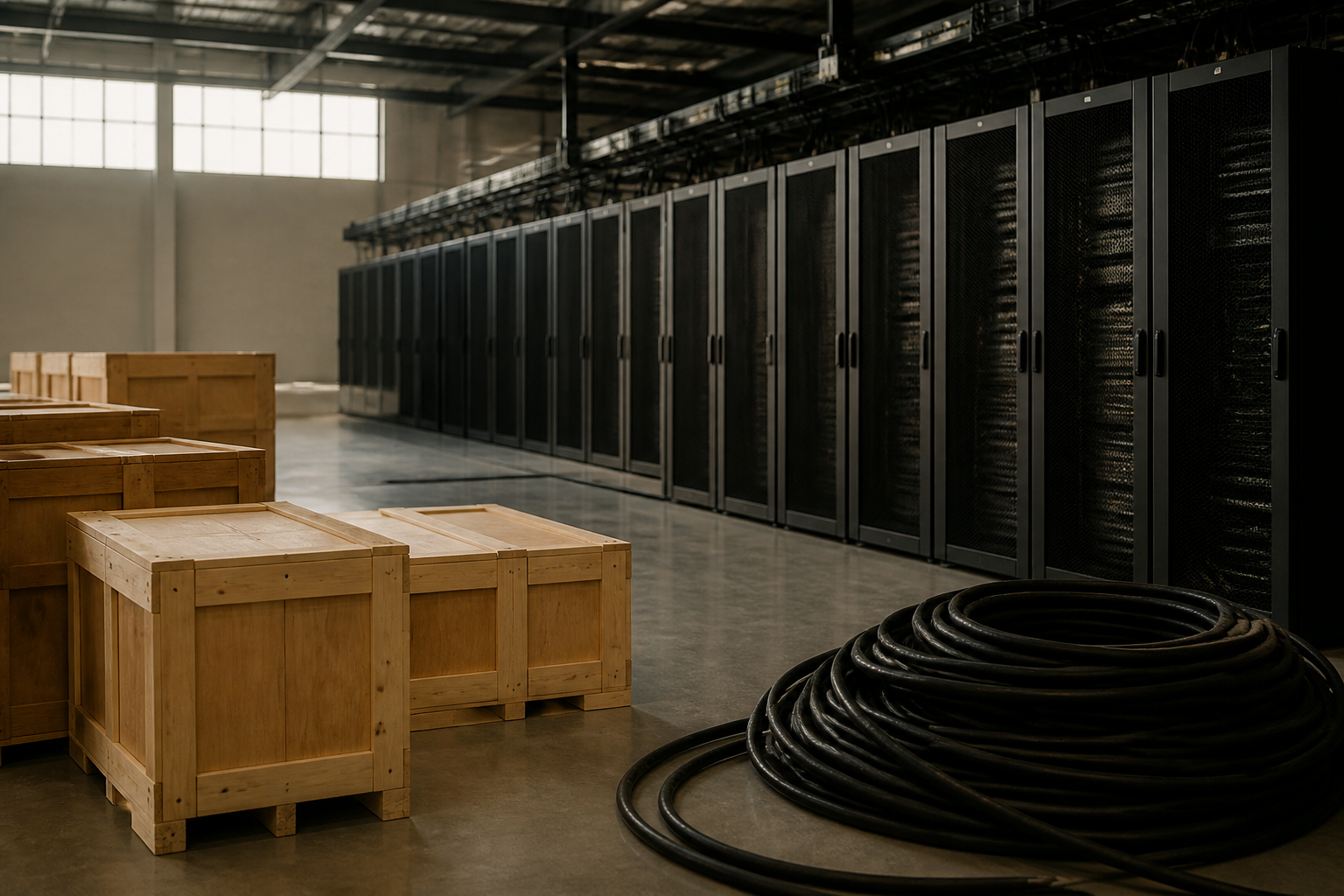
Chinese technology giants pour $18 billion into hardware infrastructure
Alibaba and Tencent directed a combined $18 billion toward hardware and infrastructure investments during the second quarter. The heavy spending reduced quarterly profits at Alibaba, though executives project the investments will prove profitable within three years.
 The Neuron·Aug 24
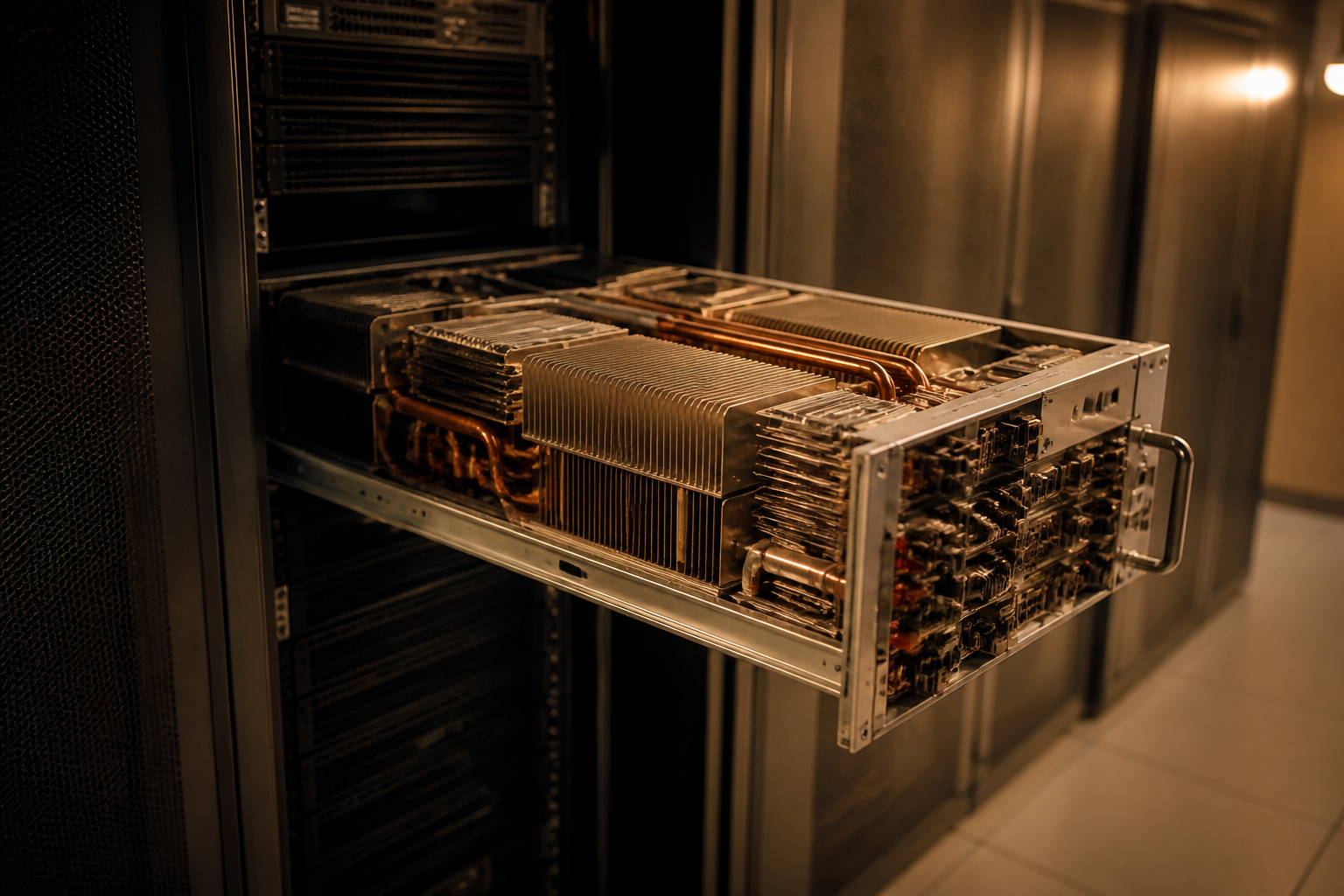
Nvidia plans price increases for next-generation hardware
Nvidia will increase prices on its upcoming server processor designs by 15% to 17% starting early next year. The adjustments are expected to raise construction costs for single large data centers by billions of dollars.
 The Neuron·Aug 24
Nvidia partners with startup Poolside on open-source software development
Semiconductor giant Nvidia is committing $7 billion to license technology and hire technical staff from Poolside, a startup valued at $12 billion. The agreement aims to build an American open-source alternative capable of competing with Chinese models.
 The Neuron·Aug 24
Anthropic targets public market debut that could top $100 billion
Financial advisers for Anthropic report the software firm is preparing an initial public offering that could raise more than $100 billion. The public stock listing could value the business near $2 trillion and may occur as early as October.
 There's An AI For That·Aug 23
Google acquires bankrupt airline's chat logs for model training
Google won a bankruptcy auction to purchase 100 million emails and 500 million internal Teams messages from Spirit Airlines for $10 million. The tech company intends to use the text dataset to train machine learning models, while customer records were omitted from the deal.
 Superhuman·Aug 22
Unitree Valuation Hits Fifty Billion Dollars in Public Trading Debut
Chinese robotics firm Unitree saw its shares surge over 460 percent during its market launch in Shanghai. The stock jump places the value of the profitable humanoid manufacturer at roughly $50 billion.
 Superhuman·Aug 21
OpenAI integrates Apple Messages support into business apps
A new integration allows corporate users to view, search, and send iMessages directly within ChatGPT software. Separately, corporate leadership informed staff that any potential stock market flotation will likely wait until at least 2027.
 Superhuman·Aug 21
Anthropic launches educational platform and prepares possible stock offering
Anthropic has opened a centralized repository called The Claude Academy featuring over 300 tutorials and guides across its software suite. The company also introduced a concise response setting for developer workflows while reportedly preparing initial documentation to go public.
 The Neuron·Aug 21
Meta spends hundreds of millions on Microsoft Azure cloud AI tools
Meta has become one of Microsoft's top artificial intelligence clients, spending hundreds of millions of dollars each year to run software on Azure infrastructure. The arrangement highlights how major tech developers rely on competing corporate cloud systems to handle expanding computing demands.
 The Neuron·Aug 21
Nvidia signs $6 billion licensing agreement with AI startup Poolside
Nvidia has reached a non-exclusive deal worth $6 billion to license software from the AI coding company Poolside, while making a separate $1 billion investment. Under the arrangement, Nvidia will hire over 100 Poolside employees to support its internal projects, though the startup's leadership remains independent.
 AI Daily Brief·Aug 21
SpaceX Clarifies Scope of Recent Discussions with AI Startup Cognition
Following reports of potential acquisition discussions between SpaceX and AI software maker Cognition, leadership from both organizations confirmed that talks were strictly technical. Conversations focused on standard integration requirements rather than a corporate buy-out.
 Superintelligence·Aug 20
OpenAI Outlines Future Listing Schedule as Usage Expands
Executive leadership at OpenAI revealed that its automated coding tool has reached 20 million weekly active users. The organization is pointing toward a public stock market listing around 2027 as enterprise adoption continues to grow.
 Superintelligence·Aug 20
Payment Processor Reports Rapid Growth Tied to Automation Shift
Financial technology provider Stripe informed investors that rapid technical advances are driving business creation and revenue expansion. The firm logged a 41 percent year-over-year revenue increase while expanding its investments in software infrastructure.
 Superhuman·Aug 20
Stripe Tells Investors the AI Singularity Started Earlier This Year
Financial services firm Stripe stated in a letter to shareholders that major economic shifts driven by artificial intelligence began at the start of the year. The company detailed its plans to accelerate the adoption of automated tools across various industries, following its recent purchase of AI routing service OpenRouter.
 Superhuman·Aug 20
Payment processor Stripe tells investors that major technology shift has begun
Financial services provider Stripe informed investors in a recent update that artificial intelligence is rapidly reshaping the broader economy. The company stated its intention to help spread AI technology across commercial sectors following its purchase of OpenRouter.
 The Neuron·Aug 20
Anthropic surpasses OpenAI in quarterly earnings while OpenAI plans public listing
Anthropic generated $11.6 billion in second-quarter revenue, exceeding OpenAI's $6.7 billion over the same period while achieving a small operating profit. In addition, executive statements indicate OpenAI plans to pursue an initial public offering in 2027.
 AI Daily Brief·Aug 20
Financial Analysts Question Revenue Metrics at Top AI Developers
Industry observers are scrutinizing recent revenue figures and growth measurements reported by OpenAI and Anthropic. Critics highlight differences in accounting practices, particularly regarding third-party reseller sales and short-term revenue projections.
 There's An AI For That·Aug 19
Stripe reports dominant market share among leading AI startups
Payment platform Stripe revealed that 88% of companies on the Forbes AI 50 list currently process payments through its network. In its annual investor letter, the firm pointed to the start of the year as an inflection point for mainstream AI commercialization.
 There's An AI For That·Aug 19
Stripe points to January 1 as starting mark for AI singularity
In its recent investor note, payment processor Stripe claimed that the AI transition reached a crucial threshold at the start of the year. The company noted that 88 percent of leading artificial intelligence startups on the Forbes AI 50 list currently rely on its infrastructure.
 Superintelligence·Aug 18
Anthropic Revenue Pace Exceeds $65 Billion Ahead of Planned Stock Market Listing
Financial disclosures indicate Anthropic reached an annualized revenue run rate above $65 billion, growing more than seven times over its performance late last year. The surge comes as the artificial intelligence developer prepares paperwork for a public stock listing.
 The Neuron·Aug 18
Automation startup Relay closes down as founder moves to Google
Workflow tool Relay has ceased operations and wound down its platform. The company's chief executive will be joining Google to manage product efforts for the Chrome browser.
 The Neuron·Aug 16
OpenAI revenue rate crosses 40 billion dollar threshold prior to public listing
OpenAI reached an annualized revenue pace of forty billion dollars as it plans its transition toward a public market debut. As part of an executive reorganization, former executive Dali Rajic has stepped into the role of chief revenue officer.
 TAAFT·Aug 15
SpaceX completes multi-billion dollar acquisition of AI coding tool Cursor
Aerospace company SpaceX has finalized a $60 billion stock purchase of the AI code editor Cursor, expanding on a partnership initiated earlier this year. The companies noted that their joint efforts recently yielded the Grok 4.6 model and pledged to continue making their tools more affordable and effective.
 AI Daily Brief·Aug 15
Executive turnover continues at OpenAI as Chief Revenue Officer steps down
Denise Dresser left OpenAI after serving nine months as Chief Revenue Officer, making her the second top executive to leave the company in a single week. Wiz executive Dali Rajic will take over the revenue team as President Greg Brockman adjusts leadership structures prior to an expected public offering.
 Superintelligence·Aug 14
OpenAI revenue pace reaches forty billion dollars as public market preparation continues
OpenAI's annualized revenue run rate has surpassed $40 billion, effectively doubling its pace from late 2025. The growth comes as both OpenAI and rival developer Anthropic file confidential documents to prepare for public market offerings. The financial acceleration reflects expanding commercial spending on artificial intelligence services.
 The AI Break·Aug 14
OpenAI chief operating officer departs to start new business
Brad Lightcap is stepping down after eight years leading operational strategy at OpenAI. His exit to launch a independent enterprise represents the latest high-profile executive departure from the artificial intelligence laboratory.
 Superintelligence·Aug 14
Anthropic investors target $2 trillion valuation ahead of public offering
Venture investors supporting Anthropic are anticipating a public stock listing that could value the company at $2 trillion or higher. The optimism follows rapid revenue expansion, with internal forecasts projecting annual revenues to top $100 billion over the next two years.
 Superhuman·Aug 12
Nvidia partners with Wall Street firms to fund AI data centers
Nvidia teamed up with six major financial institutions, including BlackRock and Goldman Sachs, to organize up to $500 billion for AI hardware infrastructure. The project aims to frame data center development as a standardized, lower-risk investment category for institutional investors.


