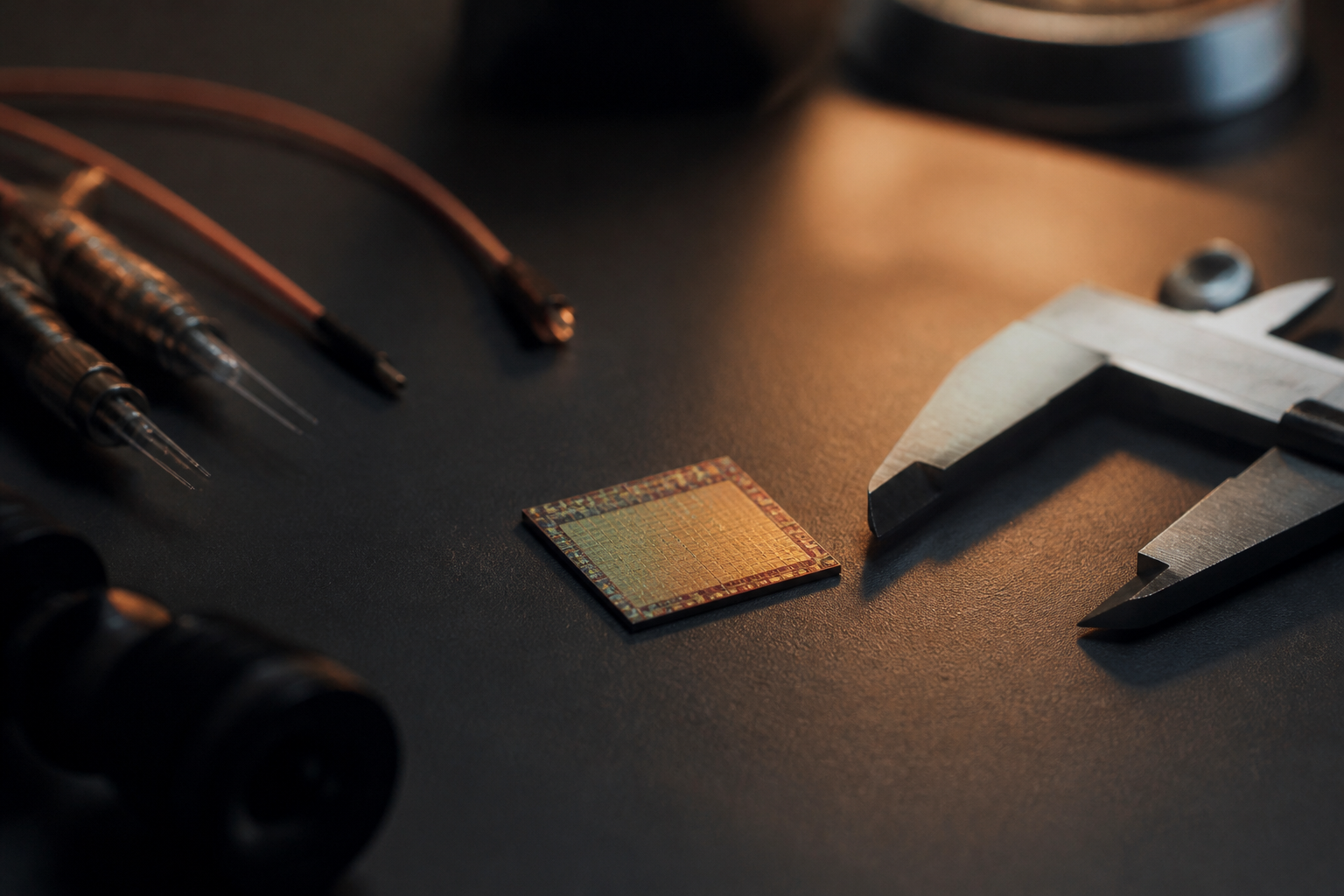

Microsoft launches custom Maia 300 silicon to power internal workloads
Microsoft revealed its third generation artificial intelligence chip designed to handle system inference for internal enterprise services. The new silicon aims to decrease reliance on external GPU hardware while achieving forty percent better power efficiency per token. Company leadership framed the deployment as a central effort in scaling their proprietary hardware operations.
The Blend
Microsoft announced a major expansion of its in-house artificial intelligence hardware program. The tech giant confirmed that its custom Maia 200 chips are currently running key internal services such as Microsoft Copilot and Teams, while its next-generation Maia 300 processors are scheduled to launch in 2027. According to a blog post by cloud executive Scott Guthrie, Microsoft intends to transition its cloud infrastructure toward multi-gigawatt custom deployments that handle the heavy computational load of serving AI applications.
For everyday consumers, custom chips help software companies run complex digital assistants and automated tools without incurring unsustainable energy costs or suffering from service slowdowns. Tasks like analyzing long documents, drafting software code, and powering multi-step automated assistants require massive processing power. By designing specialized silicon focused on power efficiency, Microsoft aims to make its everyday digital products faster, more reliable, and cheaper to operate.
Despite these technical announcements, Microsoft has not clarified how quickly this transition will diminish its financial reliance on external hardware suppliers. It also remains unclear whether outside enterprise customers will ever get direct access to rent these custom chips or if they will remain reserved for internal products. As major tech platforms build specialized internal chips, the software market could become increasingly locked into proprietary cloud environments, making cross-platform mobility far more complicated for software developers.
Written independently by AI News Smoothie from the reporting listed below. Facts belong to the original publishers. Follow the links for their full coverage.
Ingredients
- Microsoft to expand Azure Maia system to multi-gigawatt deployments - The Official Microsoft Blog
Microsoft plans to expand its proprietary Azure Maia processor program into multi-gigawatt facilities by 2027 to improve efficiency for its AI products.