
Google Places Prototype AI Hardware Into Earth Orbit
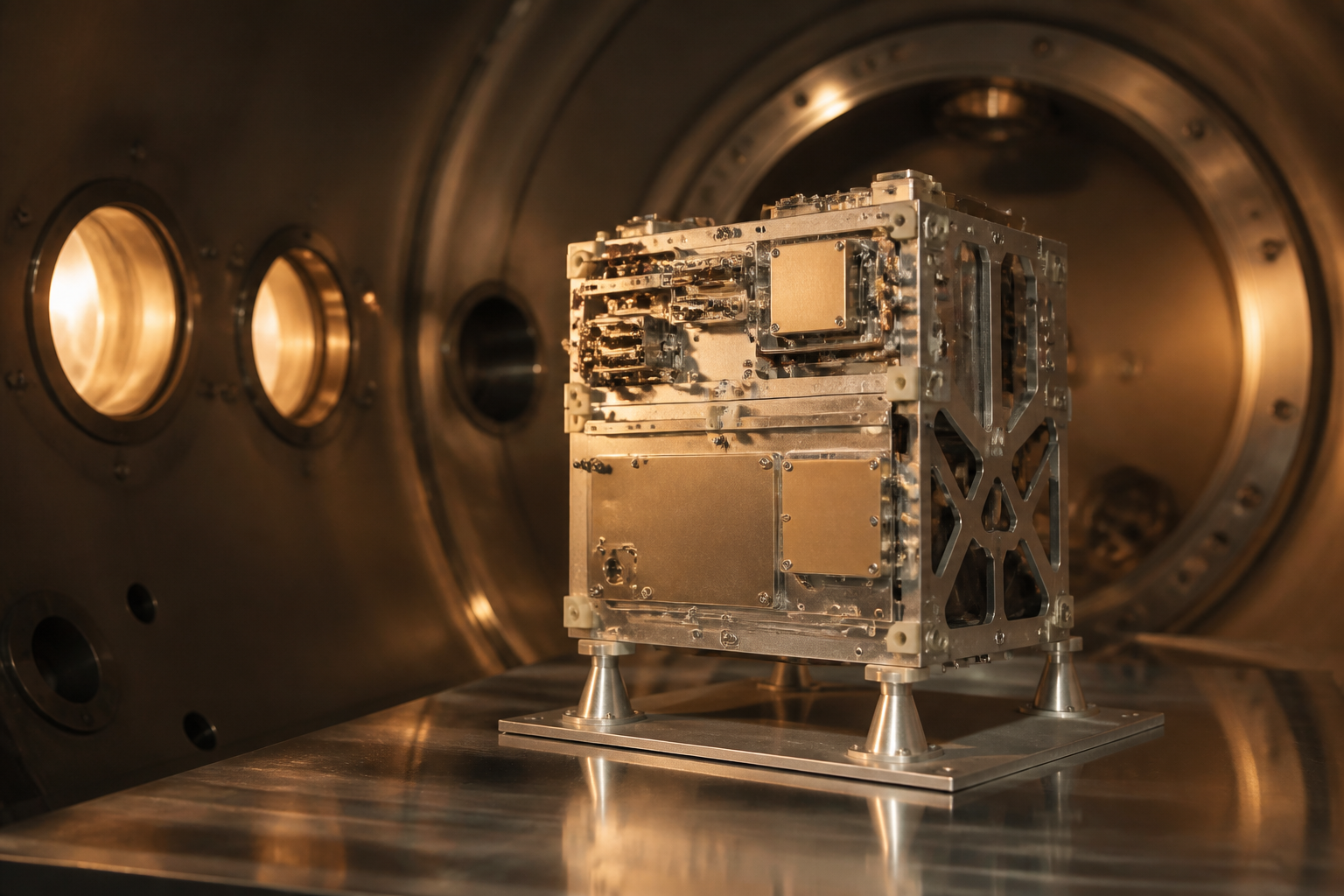
A SpaceX rocket recently launched a satellite carrying four Google Tensor Processing Units to test orbital compute capabilities. The test runs short operational bursts to evaluate how chips withstand space radiation and extreme temperatures. Google views the mission as an early step toward building dedicated space based data center networks.
The Blend
Google has placed custom artificial intelligence chips into Earth orbit to evaluate whether space can host future computing facilities. A prototype satellite carrying four Google Tensor Processing Units launched aboard a SpaceX rocket in collaboration with satellite operator Planet. Google announced that it successfully established communication with the spacecraft, which is now operating as intended.
The initiative, dubbed Project Suncatcher, aims to determine if delicate hardware can survive the harsh environment outside Earth's atmosphere. Ground based data centers consume massive amounts of land, water, and electricity, leading researchers to explore whether solar powered orbital systems could eventually offload heavy digital workloads. During this initial phase, engineers will run short tests to see how radiation and extreme temperature fluctuations impact chip reliability over time.
Significant technical hurdles remain before orbital computing becomes practical or cost effective. Radiation can easily corrupt data or damage silicon, while dissipating heat in a vacuum poses a major engineering challenge. Furthermore, it is not clear whether transmitting massive datasets back and forth between Earth and space will create latency issues that outweigh any energy savings achieved in orbit.
Written independently by AI News Smoothie from the reporting listed below. Facts belong to the original publishers. Follow the links for their full coverage.
Ingredients
- Google's Project Suncatcher prototype satellite is in orbit
Google launched an orbital prototype satellite containing four AI chips to evaluate how machine learning hardware endures space radiation and extreme temperatures.