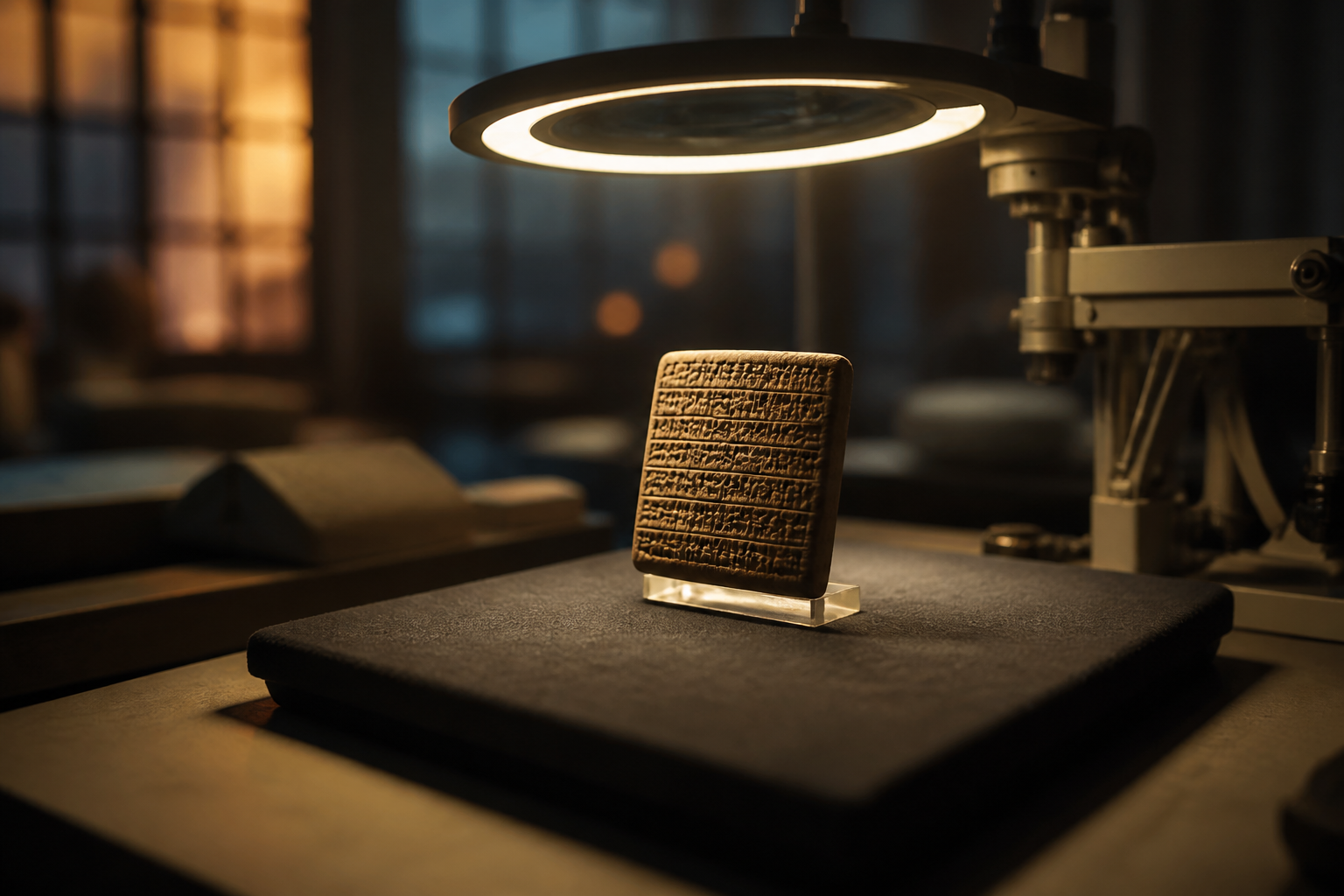
Researchers use machine learning to translate 5,000-year-old Mesopotamian clay tablets
Archaeologists and computer scientists developed a specialized translation tool called TabletCraft to translate ancient Akkadian cuneiform text into English. In a separate project, digital scanning powered by machine learning enabled researchers to reconstruct and read ancient scrolls damaged by the Mount Vesuvius eruption.
The Blend
Computational tools are opening vast historical archives that were once considered permanently lost. As reported by CBS News, an international research team led by the University of Kentucky utilized computer vision and advanced imaging to digitally unroll charred papyri buried during the Vesuvius eruption in 79 A.D. Meanwhile, parallel digital projects are applying specialized software to parse ancient Mesopotamian cuneiform tablets, turning brittle artifacts into readable modern languages.
These techniques matter because traditional archaeology faced a physical limit: physically unrolling carbonized papyrus or handling broken clay often destroyed the evidence. Machine learning algorithms can now detect nearly invisible ink traces inside three-dimensional scans, enabling researchers to reconstruct entire ancient documents. This shift allows classicists to study full philosophical texts and administrative records rather than guessing meaning from tiny surviving scraps.
However, technical reconstruction is only the initial step toward understanding these discoveries. Hundreds of scrolls from the Herculaneum library remain unexamined, and translation models still struggle with context and rare vocabulary. As Brent Seales, leader of the scroll initiative, noted to CBS News, the primary bottleneck is shifting from computer vision to translation and historical analysis by human scholars.
This rapid digital recovery raises a deeper question about how automated tools might subtly shape our reading of history. As algorithms begin translating ancient dialects at scale, there is a risk that model assumptions could introduce subtle misinterpretations of ancient idioms, quietly altering how modern society views early human civilization.
Written independently by AI News Smoothie from the reporting listed below. Facts belong to the original publishers. Follow the links for their full coverage.
Ingredients
- Scientists decipher new secrets from ancient scrolls scorched by Vesuvius eruption: "Finally able to read them" - CBS News
Researchers leveraged high-resolution imaging and machine learning to virtually unroll and read carbonized Roman scrolls that were damaged during the eruption of Mount Vesuvius.