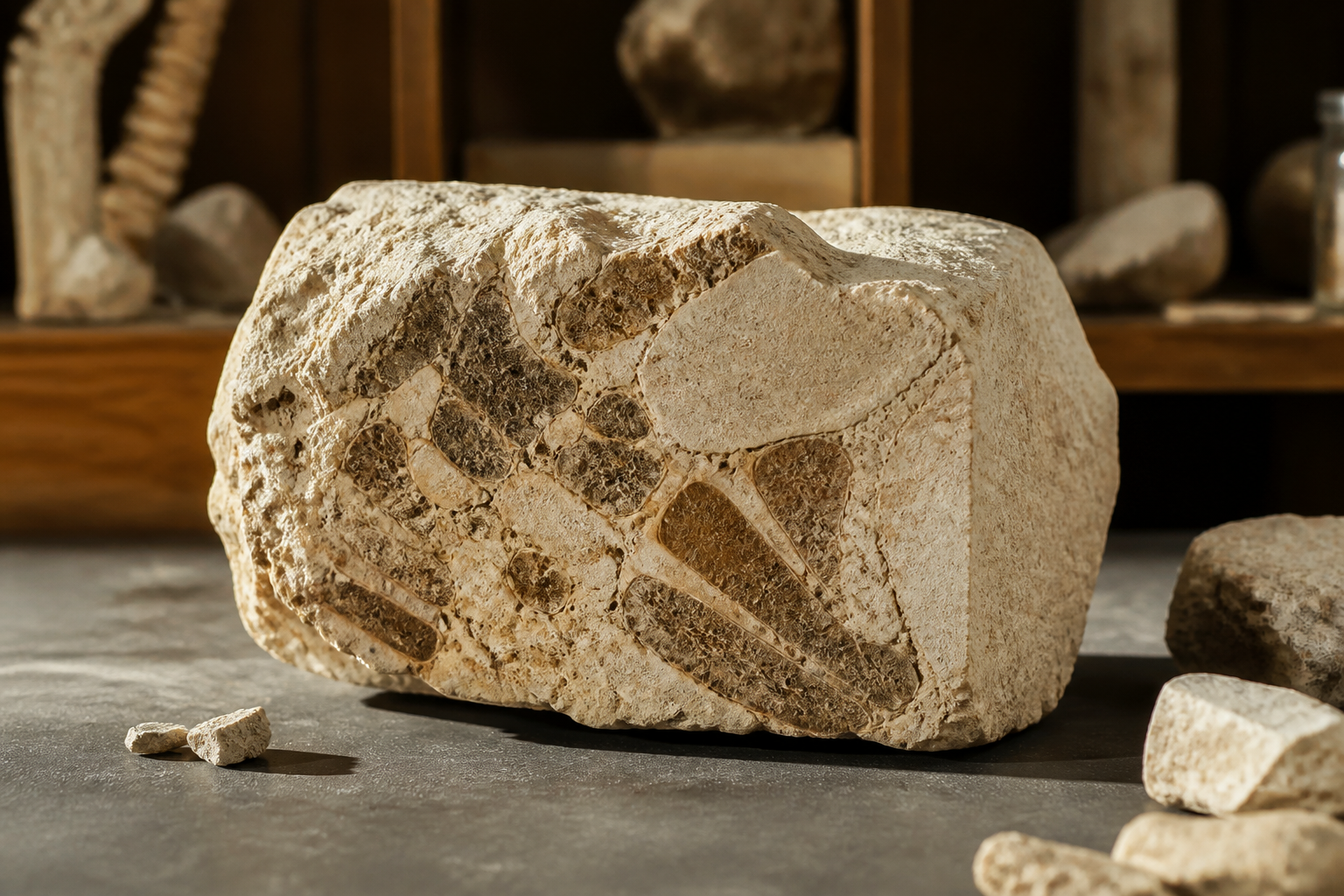
Researchers discover ancient predator fossil inside Egyptian limestone
Advanced 3D X ray scans of a 45 million year old skull found in limestone used for Egyptian monuments revealed a new extinct crocodilian genus. The species, named Herugavialis, belongs to a family of long snouted aquatic predators.
The Blend
Scientists analyzing 45 million year old limestone from Egypt discovered a previously unknown ancient crocodile species named Herugavialis. The rock layer containing the fossil belongs to the same geological formation used thousands of years later to carve the Great Sphinx of Giza. Science News reported that researchers identified the long snouted predator after examining its fossilized skull, which coincidentally lacks its snout tip just like the famous monument nearby.
This discovery provides key insights into how ancient aquatic reptiles adapted during the Eocene epoch. Modern relatives such as the gharial are severely endangered today, so mapping out extinct evolutionary branches helps scientists understand how past environmental shifts shaped survival over millions of years. Advanced scanning tools also allow paleontology teams to inspect specimens encased inside solid stone without causing structural damage.
While the skull confirms that Herugavialis formed a distinct branch on the crocodilian family tree, much of its overall physical structure remains unknown due to missing skeletal parts. Researchers have yet to establish its exact body length or detailed hunting behaviors beyond general evidence of fish consumption in the ancient Tethys Ocean. This raises a fascinating broader question: how many other prehistoric species might be permanently preserved inside iconic stone structures built throughout human history?
Written independently by AI News Smoothie from the reporting listed below. Facts belong to the original publishers. Follow the links for their full coverage.
Ingredients
- An extinct crocodilian was found among rocks that built the Great Sphinx
Researchers identified a 45 million year old extinct crocodilian species preserved within the same limestone formation used to build the Great Sphinx of Giza.