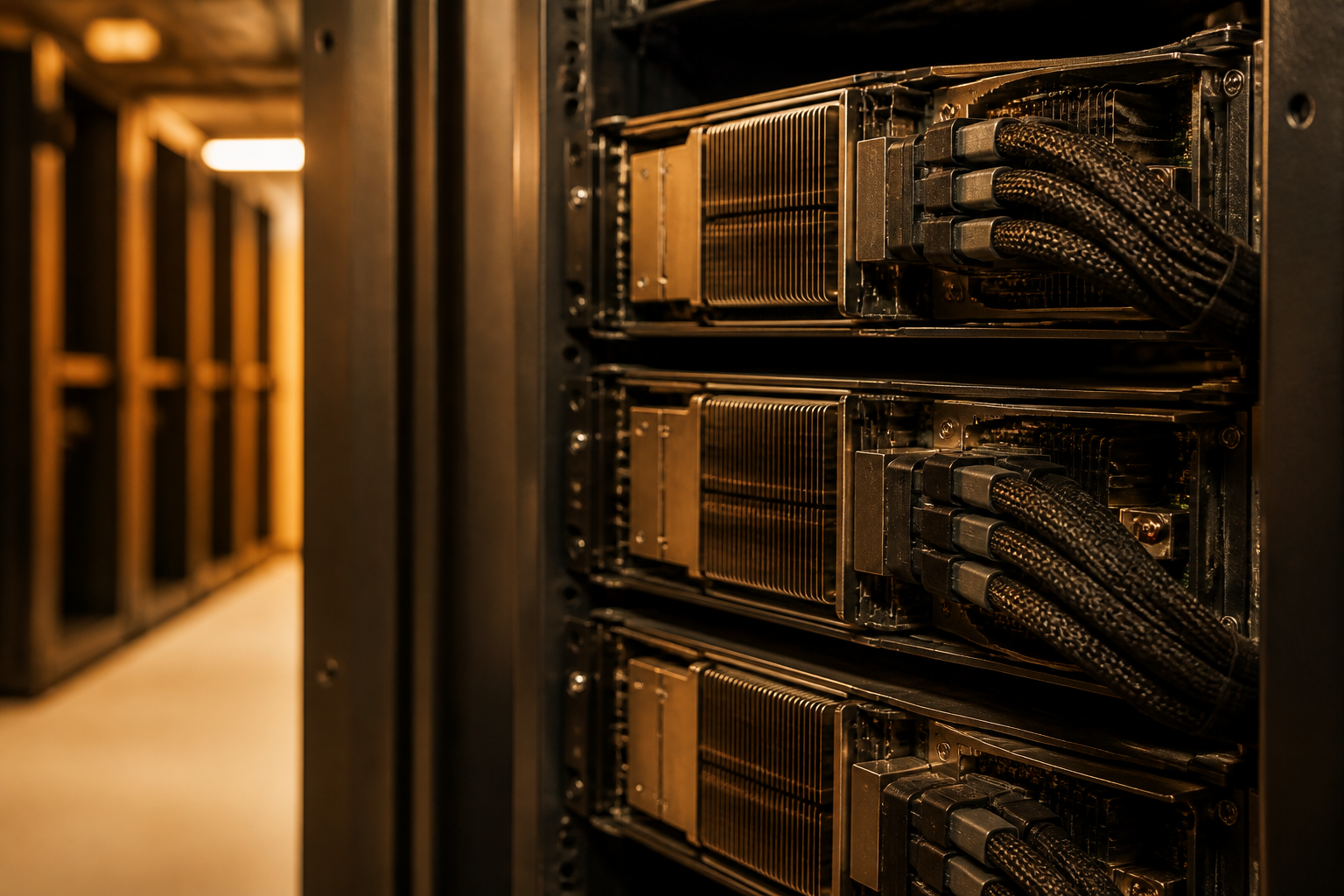

Nvidia Claims Older AI Hardware Remains Profitable for Years
Nvidia published arguments defending the longevity of its artificial intelligence processors, addressing concerns that hardware investments will become obsolete too quickly. Data from major cloud providers indicates server accounting lifespans have been extended to as long as six years.
The Blend
Nvidia has published a case arguing that its artificial intelligence microchips maintain commercial value far longer than critics assume. Addressing investor fears that massive data center investments will become obsolete within a couple of years, the chipmaker highlighted how older hardware continues to generate steady revenue even as faster next-generation models hit the market.
To support its position, Nvidia pointed to cloud companies and industry research showing that server lifespans are expanding. Data center operator CoreWeave recently extended rental commitments for Nvidia chips introduced in 2020 through 2029, while tech companies like Microsoft have kept older graphics processors running for over eight years. Software improvements allow these legacy chips to handle newer AI tasks, while secondary markets continue to value previous-generation hardware. This longevity helps data center operators stretch their accounting schedules and justify spending tens of millions of dollars on new hardware infrastructure.
However, as newer chips achieve exponentially higher efficiency and lower processing costs per task, the economic reality for smaller data center operators may prove more complex. It remains to be seen whether rising electricity costs will eventually make running older, power-hungry processors economically unfeasible, regardless of how cheap the physical hardware becomes.
Written independently by AI News Smoothie from the reporting listed below. Facts belong to the original publishers. Follow the links for their full coverage.
Ingredients
- Productive, Durable, Fungible: How NVIDIA AI Factories Maximize Return on Investment | NVIDIA Blog
Nvidia argues that its AI hardware maintains commercial profitability for up to a decade through continuous software updates and strong resale value, helping operators justify massive infrastructure investments.