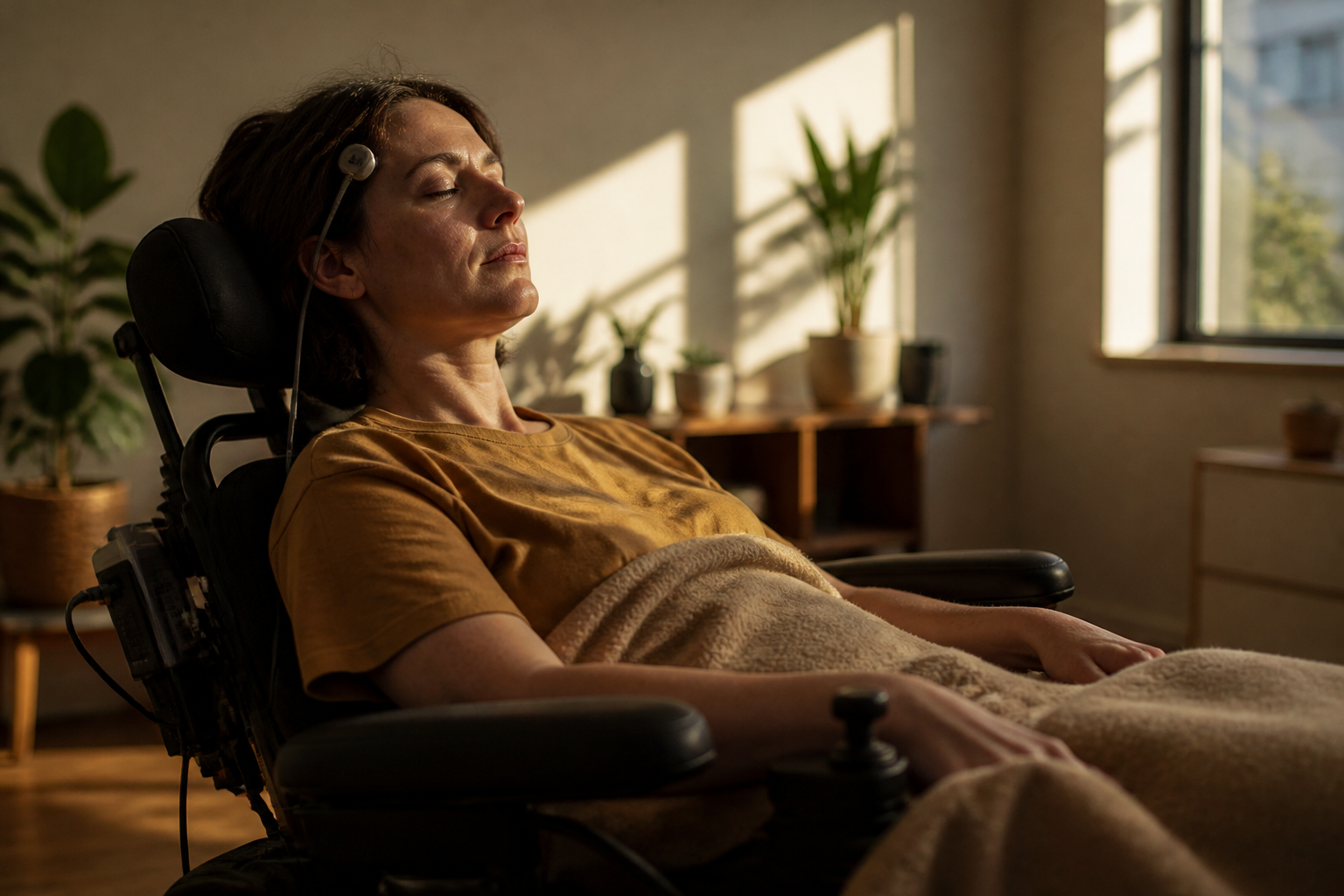
Brain implants paired with AI restore speech for paralyzed individuals
Neural implants combined with rapid AI calibration are enabling people with severe paralysis to communicate again using synthesized versions of their original voices. In one case, an ALS patient began speaking through voice software after thirty minutes of system training. More than one hundred individuals now use comparable brain computer interface hardware.
The Blend
Medical researchers are uniting neural microchips with modern machine learning to give non-verbal patients their voices back. Recent clinical demonstrations show that people living with severe motor conditions, such as amyotrophic lateral sclerosis, can start generating audible sentences after just half an hour of software calibration. Instead of relying on a generic robotic tone, the system reconstructs the person's distinctive cadence and pitch using old recordings.
For anyone living with severe physical paralysis, losing the capacity to speak is deeply isolating. Older assistive tools often rely on slow eye-tracking cameras or minute facial twitches to pick letters off a screen. Translating cortical signals directly into fluid spoken sentences removes that friction, restoring a sense of identity and making everyday conversations far more spontaneous.
While brain-computer interfaces were once confined to rare laboratory demonstrations, adoption is quietly expanding. Over a hundred individuals globally have now received comparable surgical implants. As the algorithms processing these signals grow more capable, the time required to train the software has plummeted from weeks to minutes.
Substantial hurdles still lie ahead before such procedures become standard medical care. Invasive brain operations carry inherent risks, and it remains unclear whether these delicate electrode arrays can operate inside brain tissue for decades without losing clarity. Moreover, how healthcare systems will manage the long-term maintenance and steep costs of these bespoke digital prosthetics remains a critical open question.
Written independently by AI News Smoothie from the reporting listed below. Facts belong to the original publishers. Follow the links for their full coverage.
Ingredients
- https://www.youtube.com/watch?v=j5X4eCXZGac
Advancements in neural interfaces and machine learning are allowing paralyzed patients to talk using customized digital recreations of their natural voices.