Simulation
9 stories in this blend
 There's An AI For That·6d ago
Autonomous John Deere Tractor Performs Wheelies Using Virtual Simulation AI
Researchers trained an artificial intelligence model inside a virtual simulation to execute wheelies with a massive tractor. Once perfected digitally, the system successfully executed the maneuver on a real heavy tractor using an onboard laptop without endangering human operators.
 Superhuman·Nov 14
Physicl
Physicl provides hyper-realistic 3D environmental simulations designed to train physical robotics models. It helps robotics engineers teach complex physical behaviors to AI agents without relying on expensive physical real-world tests.
 Superhuman·Nov 2
TheySaid
A customer sentiment simulation service that uses digital audience personas to forecast user reactions to products and messaging. It suits market researchers, product managers, and growth teams evaluating campaign strategies prior to public release.
 Superintelligence·Oct 27
Interactive world simulator generates training grounds for physical robots
Google DeepMind announced Genie 4, a model that creates navigable 3D environments featuring realistic physics and synthesized sound. Paired with reasoning models, the software creates virtual spaces where robotic systems can practice complex workflows safely.
 There's An AI For That·Oct 19
High-Stakes Decision Analysis Simulation
This interactive game prompt casts the chatbot as an adversarial game show producer evaluating your recent choices. It helps you uncover hidden personal biases by forcing you to re evaluate a major decision under competitive pressure.
 There's An AI For That·Oct 19
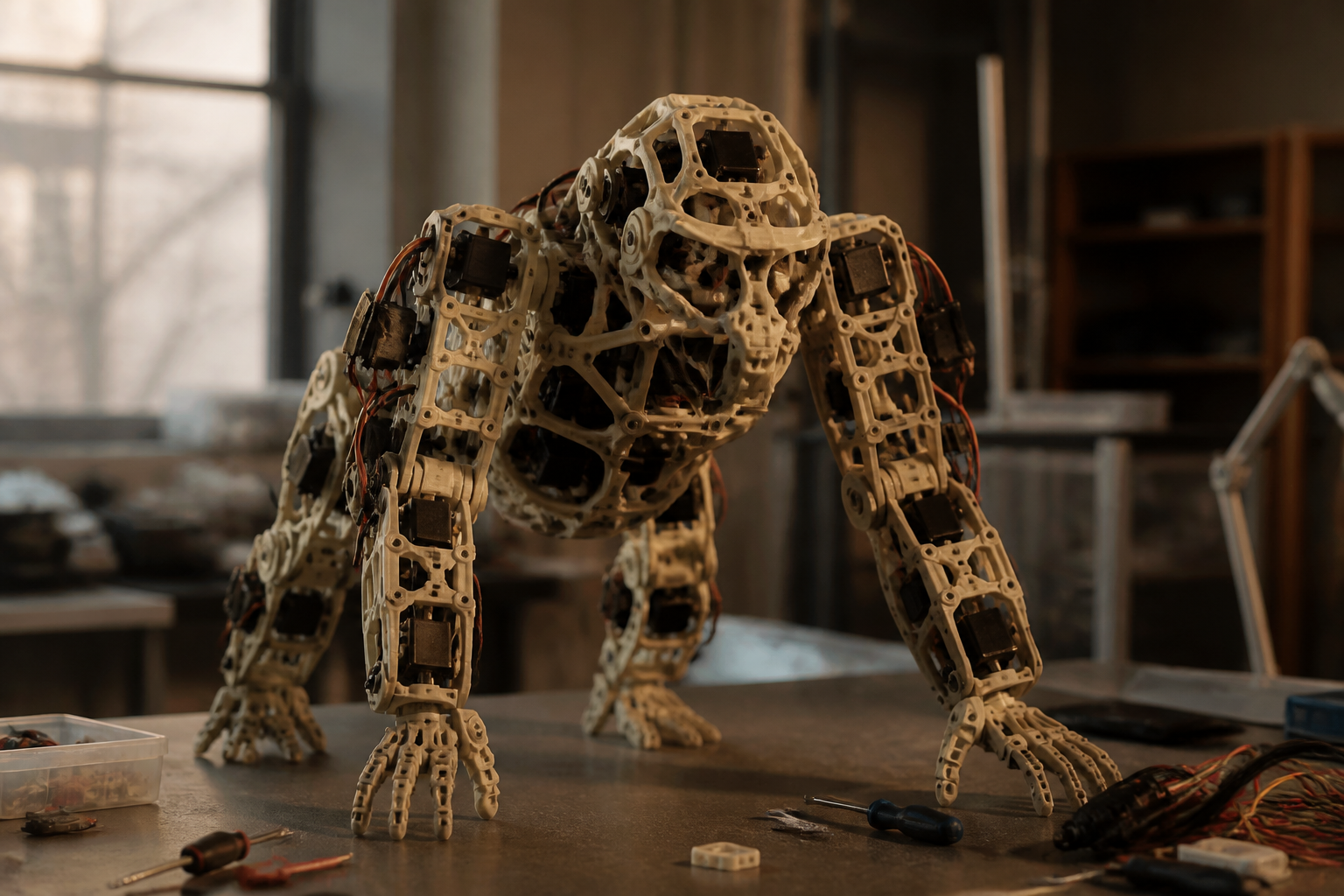
Autonomous Pipeline Designs Physical Robot and Simulates Movements
Researchers used artificial intelligence to generate physical robot hardware designs alongside a system called Roboforge that trains movement in virtual simulations. The team successfully validated the concept by constructing a physical gorilla robot using AI generated specifications and executing the simulated motions.
 There's An AI For That·Oct 12
Odyssey Introduces Generative Virtual Environments Driven by Text Prompts
A startup named Odyssey has revealed a world model that transforms text descriptions into interactive spaces users can navigate in real time. Unlike static video generation, the system continuously calculates physical interactions to react dynamically to user input.
 There's An AI For That·Oct 10
Biological Simulation Maps Entire Fruit Fly Neural Network in Virtual Environment
Bio-research firm Eon constructed a digital simulation of a fruit fly brain by scanning seven thousand micro slices of real neural tissue. The resulting digital entity operates autonomously inside a simulated world, exhibiting realistic walking and feeding behaviors when virtual sensors encounter food.
 There's An AI For That·Sep 25
Researchers simulate thousands of autonomous AI scientists conducting research
A project called Primus Society established a virtual ecosystem where 10,000 autonomous AI agents carry out academic research. The system uses a simulated grant process overseen by a human supervisor, allowing agents to propose hypotheses, request computing budget, and attempt to disprove existing findings.


