Healthcare AI
6 stories in this blend
 There's An AI For That·Nov 11
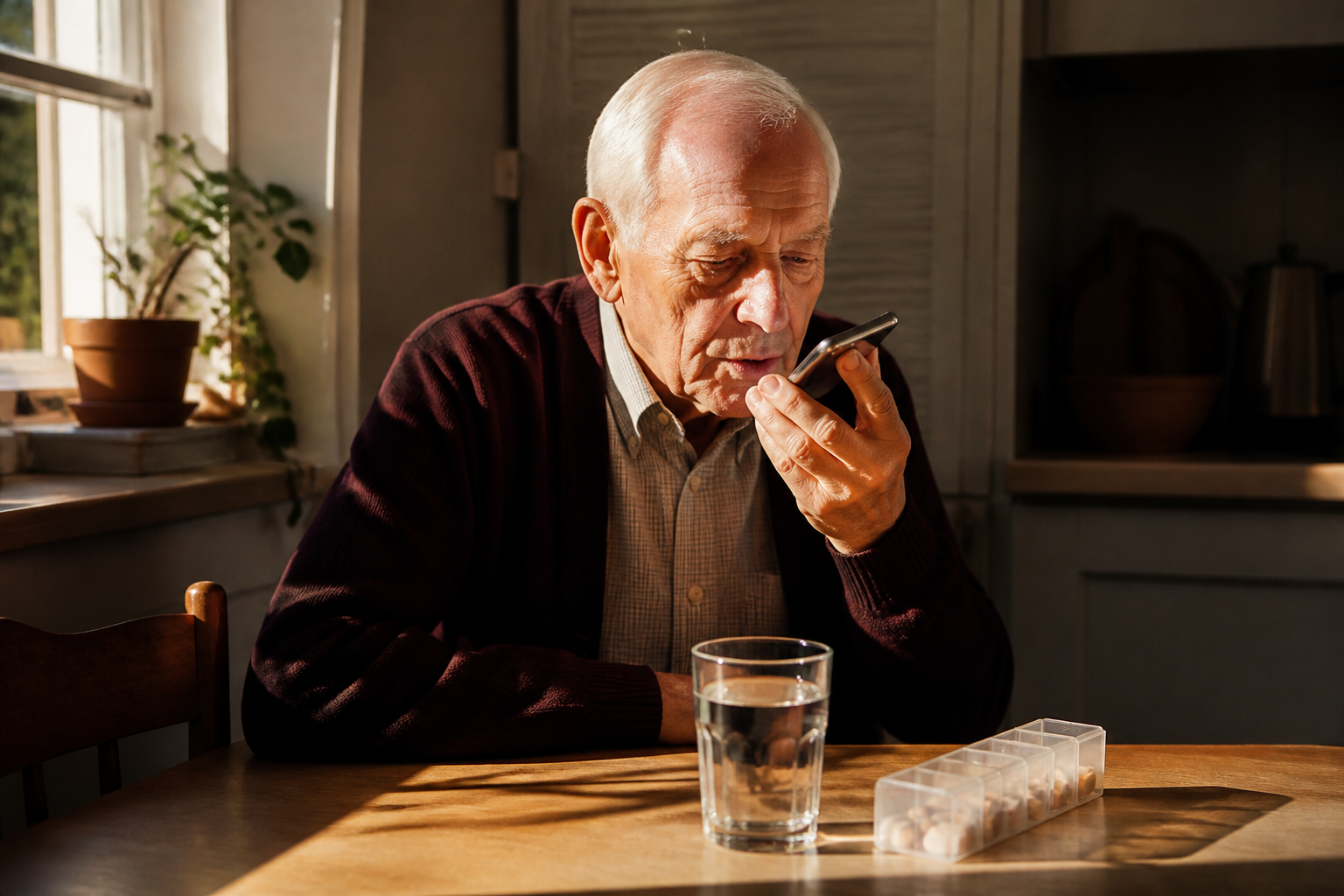
Daily Voice Recordings Help Detect Heart Failure Complications Early
A clinical trial involving over five hundred patients demonstrated that daily vocal monitoring on a smartphone can spot fluid buildup before breathing difficulties occur. Vocal changes caused by airway swelling alerted clinicians to heart failure issues over three weeks before hospital visits.
 Superintelligence·Oct 29
Medical researchers build facial analysis AI to assess patient biological age and survival rates
Researchers at Mass General Brigham developed an AI model named FAHR-Face that analyzes facial photographs to calculate biological age and predict cancer survival outcomes. The system evaluates specific facial markers to provide objective health assessments, and a public research study is open for community testing.
 There's An AI For That·Oct 29
On device AI generates full phrases for ALS patients using brain computer headsets
Researchers at Drexel University added AI phrase prediction to brain reading headsets used by people with ALS. Instead of picking every letter individually, users select contextual phrase suggestions generated from conversation in the room. The system processes all personal data directly on the device to maintain privacy.
 Superhuman·Oct 9
Nolla Health receives approval for automated prescription system
Utah regulatory bodies granted permission to Nolla Health to initiate a trial program where artificial intelligence software generates medical prescriptions. The program represents one of the first state-sanctioned deployments of automated medical prescribing.
 There's An AI For That·Sep 17
CorralData
Healthcare analytics platform that aggregates medical and wellness records using automated HIPAA compliant workflows. It assists healthcare managers and operators with standardized reporting and operational insight extraction.
 Superintelligence·Aug 12
Google Trains Gemini AI Model Using Simulated Medical Encounters
Google and DeepMind published results on ResidencyRL, a system that trained Gemini 3.5 Flash through nearly 50,000 simulated doctor-patient interactions. By practicing diagnostic routines and communication skills against automated patient personas, the model improved its clinical accuracy from 81% to 88%.


