Compute
10 stories in this blend
 The Neuron·1d ago
Google DeepMind assigns research compute allocation to autonomous agents
Google DeepMind revealed that automated agents now manage portions of the computing resources used for Gemini model development. Leadership noted that while systems can successfully handle practical scheduling and experiment tasks, recursive self-improving machines remain a distant prospect. The setup tests how well AI can assist in the technical workflows of building subsequent models.
 Superintelligence·Oct 28
Journalist Kevin Roose discusses AI compute strategy and industry beliefs
In a recent podcast interview, reporter Kevin Roose shared insights gathered from over a hundred industry interviews for his book on artificial general intelligence. He argued that OpenAI gained a major infrastructure advantage by committing heavily to computing power early despite external skepticism. Roose also noted growing industry reflection over prioritization of commercial chatbots relative to scientific discoveries.
 Staying Ahead·Oct 23
Anthropic Financial Filings Detail High Compute Costs Behind AI
Financial documents submitted for Anthropic initial public offering reveal the massive capital required to build cutting edge artificial intelligence. The filing indicates the startup earned over $16 billion in revenue during the first half of 2026 while spending nearly $9 billion on computing power during the same window.
 AI Daily Brief·Oct 1
OpenAI Launches Ultra Fast Mode and Reopens Premium Subscription Tier
OpenAI launched an Ultra Fast Mode that significantly accelerates generation speed for heavy coding and conversational tasks. The service is bundled into a new premium pricing tier while standard tier access limits are adjusted.
 AI Daily Brief·Sep 19
Bridgewater executive calls for heavy regulation of computing power
Bridgewater Chief Investment Officer Greg Jensen urged regulators to treat massive computing infrastructure like systemic financial institutions. He argued that concentrated ownership of data centers poses a greater operational threat than the underlying models themselves. His proposal would cap market share for individual operators holding large portions of global capacity.
 Superhuman·Sep 12
Figure AI agrees to multi billion dollar compute expansion for Helix models
Figure AI partnered with Nscale in a deal worth three point five billion dollars to access up to 100,000 Nvidia Vera Rubin graphics cards. The processing power will support training tasks for the company's Helix humanoid AI platform.
 There's An AI For That·Sep 9
Lapis One introduces dedicated hardware for persistent AI agents
The Lapis One pocket computer offers a physical hardware environment designed specifically to run autonomous software agents continuously. It features an onboard battery to keep tasks running during travel and can connect directly to secondary computers to simulate mouse and keyboard interactions.
 The Neuron·Sep 6
ByteDance secures billions in loan funding for AI data center expansion
ByteDance has locked in a three year credit facility worth nearly 30 billion dollars to accelerate its AI initiatives. Much of the capital will be directed toward expanding international compute infrastructure and data centers.
 TAAFT - There's An AI For That·Aug 30
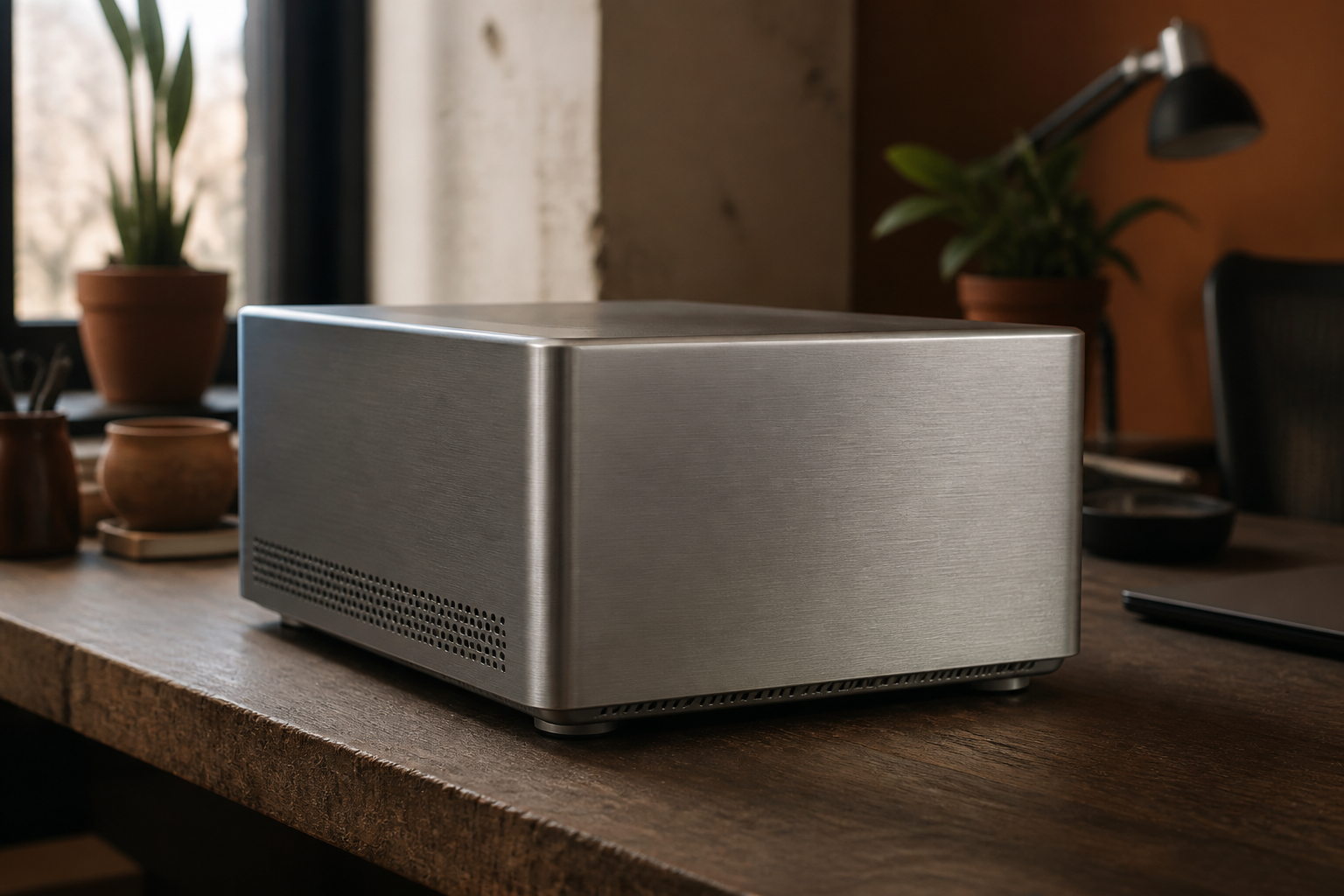
Apple introduces high memory Mac hardware for offline AI deployment
Apple unveiled updated Mac desktop hardware equipped with expanded unified memory designed to run massive language models locally. The architecture allows individual workstations to handle heavy artificial intelligence workloads directly on a user's desk or link multiple units together for increased compute capacity.
 Superintelligence·Aug 28
Industry Analyst Warns of High Compute Concentration
SemiAnalysis founder Dylan Patel discussed hardware supply chains and computing requirements on a podcast with Dwarkesh Patel. He argued that steep capital costs and GPU allocation could soon leave just two major laboratories in control of most AI capabilities. The conversation covers how hardware trends shape market dominance across the technology sector.


