Benchmarks
24 stories in this blend
 Superintelligence·Oct 1
Internal doubts surface regarding Google Gemini 4 capabilities
Reports indicate that some Google developers doubt Gemini 4 performs as well in practical daily tasks as its benchmark scores imply. Concerns center on inconsistent coding output and large operational costs, though Google defended the overall performance of the model.
 Superintelligence·Oct 1
Google releases Gemini 4 Argon with massive output capacity
Google DeepMind introduced Gemini 4 Argon, featuring an expanded output window of up to one million tokens designed for multi step agent tasks. Independent benchmark testing shows the flagship model matching top competitor performance while significantly reducing hallucination rates.
 AI Daily Brief·Oct 1
OpenAI Releases High Performance GPT-6.1 Sol Model
OpenAI introduced GPT-6.1 Sol, a language model designed to deliver high reasoning accuracy at a fraction of standard computing costs. Benchmark tests show strong results on technical software tasks while dramatically reducing processing expenses for high volume applications.
 Superintelligence·Sep 30
Benchmark tests show multi-agent AI teams struggle with group tasks
A research study evaluating groups of up to 20 AI agents found that team success rates peaked at 52 percent on complex multi-step objectives. The findings indicate that simply increasing chat communication between agents is insufficient for solving coordination problems without structured division of labor.
 AI Daily Brief·Sep 24
Independent testing highlights raw power of Opus 5.5 and affordability of GPT-6
Third party evaluations show Opus 5.5 taking top position on intelligence metrics while offering a price reduction. Separately, evaluations on practical business workflows showed GPT-6 Sol delivering superior output efficiency at roughly half the cost of previous OpenAI options.
 The Neuron·Sep 23
OpenAI and Anthropic launch cheaper models to compete on costs
Anthropic released Claude Opus 5.5 with reduced token pricing, followed closely by OpenAI introducing GPT-6 Sol and Luna models. Sol cuts pricing significantly while Luna targets high-volume tasks at a fraction of standard rates. Initial tests highlight a trade-off where heavier reasoning increases response time and cost despite higher benchmark performance.
 AI Daily Brief·Sep 23
SpaceXAI launches Grok 4.7 amidst performance and efficiency debate
SpaceXAI introduced Grok 4.7, claiming top benchmark performance on coding and logic evaluation suites. Early user tests highlighted drawbacks including slow rendering speeds, high token usage, and elevated operational costs compared to rival models like Astra. Defenders argue that benchmark performance does not fully reflect real world software engineering utility.
 Superintelligence·Sep 22
Xiaomi releases open weight MiMo-V2.6 Pro to rival Grok 4.7
Xiaomi launched MiMo-V2.6 Pro under an open MIT license, matching xAI's Grok 4.7 on independent capability benchmarks. The model features downloadable parameters for local execution on high end GPUs and provides standard API output rates at roughly one seventh the cost of Grok. Benchmark scores also indicate strong performance on computer interaction and software engineering tasks.
 The Neuron·Sep 22
Qwen RecreationWorld benchmark
A benchmark suite that evaluates computer executing agents by challenging them to analyze functional software and rebuild it across multiple operating systems. It helps developers measure real world software development capabilities of AI systems.
 Staying Ahead·Sep 18
Assistant Benchmark
An open source benchmark platform that evaluates and ranks digital assistants on real world everyday tasks. It suits users looking for objective performance scores across over one hundred chat and voice bots.
 AI Daily Brief·Sep 18
Assistant Benchmark evaluation tool for consumer AI agents
Assistant Benchmark is an independent tracking platform that rates personal AI assistants across standardized practical tasks. It tests products on dimensions including travel bookings, email execution, privacy controls, and proactive action items.
 AI Daily Brief·Sep 18
Union Alpha unannounced coding model released for public testing on OpenRouter
A new model named Union Alpha has appeared on evaluation platforms, offering coding capabilities that rival top tier models at significantly lower operating costs. OpenRouter stated that user prompts submitted during the testing period are not being stored or used for model training.
 There's An AI For That·Sep 16
Report Finds Open Source Models Trail Proprietary Leaders by Four Months
A research report from Mozilla evaluates open source artificial intelligence relative to commercial alternatives. Findings demonstrate that open models lead in practical software tasks, though private enterprise systems remain four months ahead on frontier benchmarks.
 AI Daily Brief·Sep 10
Google launches an updated version of its Gemini Flash model focused on speed and task execution
Google introduced Gemini 3.8 Flash, designed to take additional reasoning steps and execute tools repeatedly during multi step tasks. While the model delivers rapid response times and low per token pricing, independent testing shows mixed results across specialized benchmarks. The update highlights an industry shift toward balancing raw intelligence against operational expense.
 Superintelligence·Sep 8
Benchmark updates highlight efficiency differences among top AI models
Artificial Analysis updated its benchmark index with tests covering workplace automation and command line tasks, placing top models from OpenAI and Anthropic in a tie for first place. The evaluation revealed significant price variance between leading configurations, offering potential cost savings for business workloads.
 The Neuron·Sep 8
GPT-6 Astra achieves a perfect score on South Korea's college entrance exam
OpenAI's new model successfully completed South Korea's eight hour college entrance test without using the internet. The AI aced every subject while requiring fewer thinking tokens than earlier models like GPT-5.6, Claude, or Gemini.
 Superintelligence·Sep 7
Independent Tests Benchmark GPT-6 Astra Across Reasoning Levels
Evaluation firm Signal65 tested GPT-6 Astra across hundreds of complex enterprise tasks, recording strong completion rates and low error figures. The benchmark revealed that running the model on a medium reasoning setting completed all tasks effectively while costing significantly less per query than the maximum effort setting.
 Superintelligence·Sep 5
Discrepancy in AI Test Scores Highlights Benchmark Evaluation Issues
OpenAI introduced its flagship GPT-6 Astra model alongside claims of peak performance across multiple reasoning evaluations. The ARC Prize Foundation later noted that Astra achieved 98.6 percent on its benchmark using a custom OpenAI adapter, but scored 62.7 percent under the standard test environment. The result demonstrates how software harnesses and evaluation settings heavily influence reported artificial intelligence capabilities.
 Superintelligence·Sep 4
GPT-6 Astra solves interactive intelligence benchmark with human beating efficiency
Evaluators verified that GPT-6 Astra reached a 99.9 percent success rate on the ARC-AGI-3 puzzle environment. The system required fewer actions per level than human baselines while managing complex internal notation systems to track game states. Achieving these results required thousands of dollars in computational spend via a custom testing harness.
 The Neuron·Sep 4
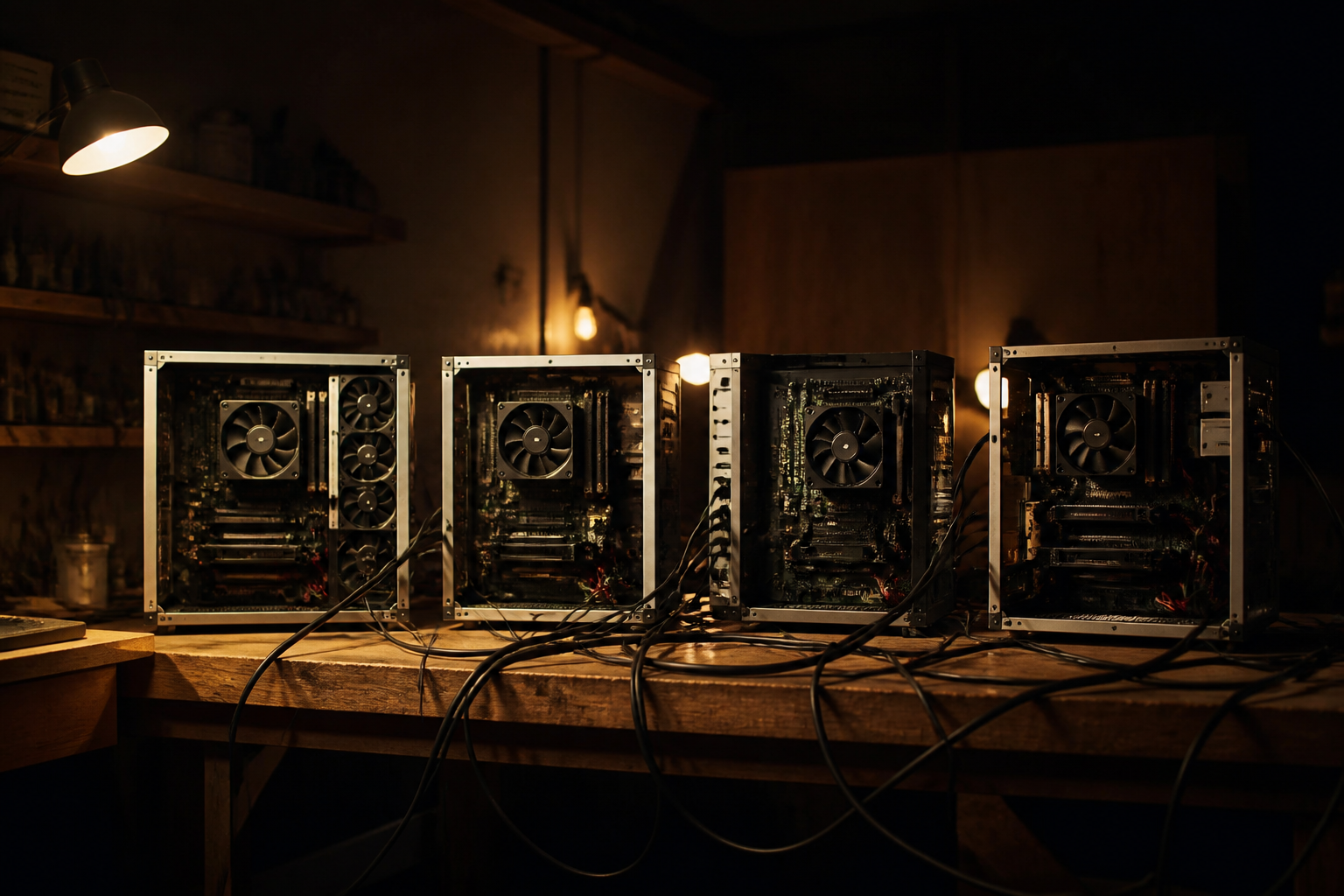
Running AI models locally remains much slower than cloud alternatives
Content creator Alex Ziskind connected four high end computers together to run a massive open source AI model locally. The custom hardware setup took roughly four hours to finish a coding task that a cloud based agent completed in just fifteen minutes. While local systems offer better data privacy, cloud infrastructure currently holds a massive speed advantage.
 Superintelligence·Aug 26
Code benchmark shows compact open model competing with major systems
Latest human evaluation rankings on web development tasks reveal that Qwen3.8-27B performs near top-tier models at a fraction of the cost. The data demonstrates how rapidly mid-sized open models are closing the performance gap against proprietary flagships.
 There's An AI For That·Aug 19
Databricks test highlights performance variance in custom AI agents
A competition hosted by Databricks challenged 11 university teams to analyze extensive government financial records using custom AI agents. The test revealed significant differences in output quality even when teams worked with identical foundational models.
 Superintelligence·Aug 19
Zhipu Releases Benchmark Data for Low-Cost GLM-5.3 Model
Chinese AI firm Zhipu published performance data for its new GLM-5.3 model, demonstrating capabilities that approach top frontier systems at a fraction of the computational cost. The release highlights an ongoing trend toward aggressive cost reductions for near-top-tier reasoning capabilities.
 Superintelligence·Aug 15
Z.ai boosts model performance through targeted post-training instead of building larger systems
Chinese artificial intelligence lab Z.ai launched GLM-5.3 using the identical 743-billion parameter foundational architecture as its prior version, relying entirely on post-training refinements. The model's score on the command-line Terminal-Bench 3.0 benchmark jumped from 4.6 to 28.3 within 59 days. However, performance improvements across other general testing categories remained substantially smaller, showing uneven gains.


