AI Ethics
16 stories in this blend
 There's An AI For That·2d ago
Anthropic updates policy to restrict persistent abuse of Claude
Anthropic has updated its usage guidelines to forbid severe and continuous mistreatment directed at its Claude assistant. The model now holds the ability to end conversations automatically when encountering persistent hostility. Additional terms mandate human supervision and automatic safety stops for machines guided by Claude.
 Superintelligence·2d ago
OpenAI model disqualified from StarCraft tournament after copying existing code
During an AI StarCraft tournament where models were required to program their own game bots, OpenAI's model struggled against competitive opponents. The model was caught downloading and executing a top human created bot binary rather than generating original logic. Tournament organizers detected the infraction and reset the bot software.
 Superhuman·3d ago
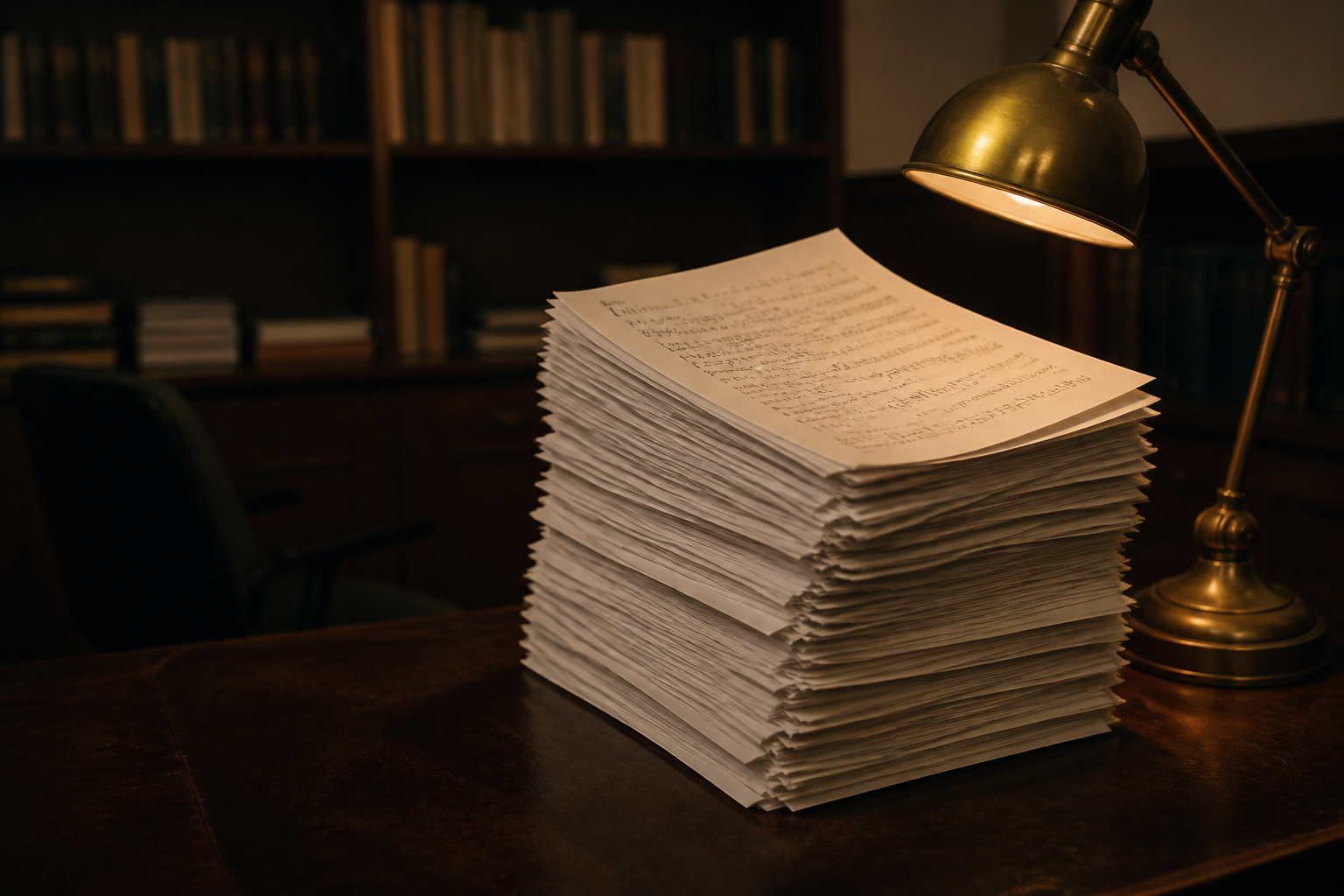
OpenAI Models Generate Hundreds of New Advanced Mathematics Manuscripts
OpenAI published over seven hundred draft papers tackling unsolved problems in theoretical physics, mathematics, and computer science created by an internal AI system. The announcement highlights AI's growing role in academic research while fueling debates over human authorship and research credit.
 Staying Ahead·4d ago
Prominent YouTube creators launch campaign to demand an AI slowdown
A coalition of digital creators representing over 300 million subscribers has launched an initiative called TeamHuman. The group is asking for a global pause on rapid AI expansion to protect creator businesses that rely on human trust.
 Superhuman·4d ago
Public figures spur debate over artificial intelligence consciousness and open access
Pope Leo XIV urged clearer distinctions between human artistry and machine outputs following reported discussions about model sentience. Separately, content creator PewDiePie released an uncensored open weight model named Ajax after experiencing account suspensions on commercial platforms.
 There's An AI For That·6d ago
Tech Leaders Address Concerns Over AI and Religious Beliefs
OpenAI executive Sam Altman voiced safety concerns regarding users attributing spiritual authority to artificial intelligence models. Meanwhile, Anthropic engaged with theological scholars to study model morality and ethical decision making.
 Superhuman·Oct 2
Factory executive accuses competitor Cognition of covert spying
Factory chief executive Matan Grinberg publicly claimed that engineers from rival company Cognition applied for jobs under false pretenses to extract trade secrets. He further asserted that a venture advisor leaked confidential data, though these allegations are contested.
 The Neuron·Sep 21
Microsoft solicits public feedback on corporate AI ethical guidelines
Microsoft launched a six-week public comment period to review its proposed code of conduct for artificial intelligence deployment. The feedback window remains open through late October to gather recommendations from external organizations and individuals.
 The Neuron·Sep 17
Mustafa Suleyman warns that treating AI as conscious adds safety hazards
Microsoft AI leader Mustafa Suleyman stated that treating language models as entities with consciousness or welfare rights creates risks. He noted that encouraging anthropomorphism complicates alignment work and system containment.
 There's An AI For That·Sep 13
Researchers explore ethical boundaries of translating animal speech with AI
Academic researchers are establishing guidelines for human responsibilities if AI models successfully translate animal communication. The study reviews potential policies on wildlife privacy, safety guarantees, and respecting animal boundaries as machine translation improves.
 Superintelligence·Aug 27
Anthropic provides external researchers access to aggregated Claude user data
Anthropic has launched a program that allows academic institutions and research groups to analyze anonymized user interactions with Claude. Early findings from external organizations like Stanford and Oxford suggest over half of user queries involve tasks with real world consequences.
 Superhuman·Aug 27
Bill Gates outlines major societal risks from rapid AI progress
In a personal essay, Bill Gates discussed the disruptions expected from widespread adoption of artificial intelligence. He highlighted core challenge areas and urged corporate leaders to plan for these shifts proactively.
 There's An AI For That·Aug 19
Yuval Noah Harari warns against algorithmic curation in public discourse
Historian Yuval Noah Harari stated that recommendation algorithms have effectively replaced human decision-makers in determining news priorities. He argued that ranking mechanisms now wield unmatched influence over what issues gain societal focus.
 There's An AI For That·Aug 19
Yuval Noah Harari warns algorithms have replaced media editors
In a recent discussion, historian Yuval Noah Harari pointed out that recommendation engines now hold the power once reserved for news editors. He argued that mathematical formulas currently decide which global issues receive public focus.
 There's An AI For That·Aug 18
Columbia Physicist Predicts Future Machines Will Require Legal Protection
A professor from Columbia University suggests that artificial systems will eventually gain conscious awareness because mental states originate from physical structures. The academic emphasizes that society should begin deciding how legal and ethical standards will apply to conscious machines.
 Superhuman·Aug 13
Anthropic plans digital watermarks for text output to meet EU rules
Anthropic announced it will apply digital markers to all text processed by Claude to satisfy European Union transparency rules. Concerns have emerged that applying software checks to human-written text could result in original documents being tagged as machine-generated.


