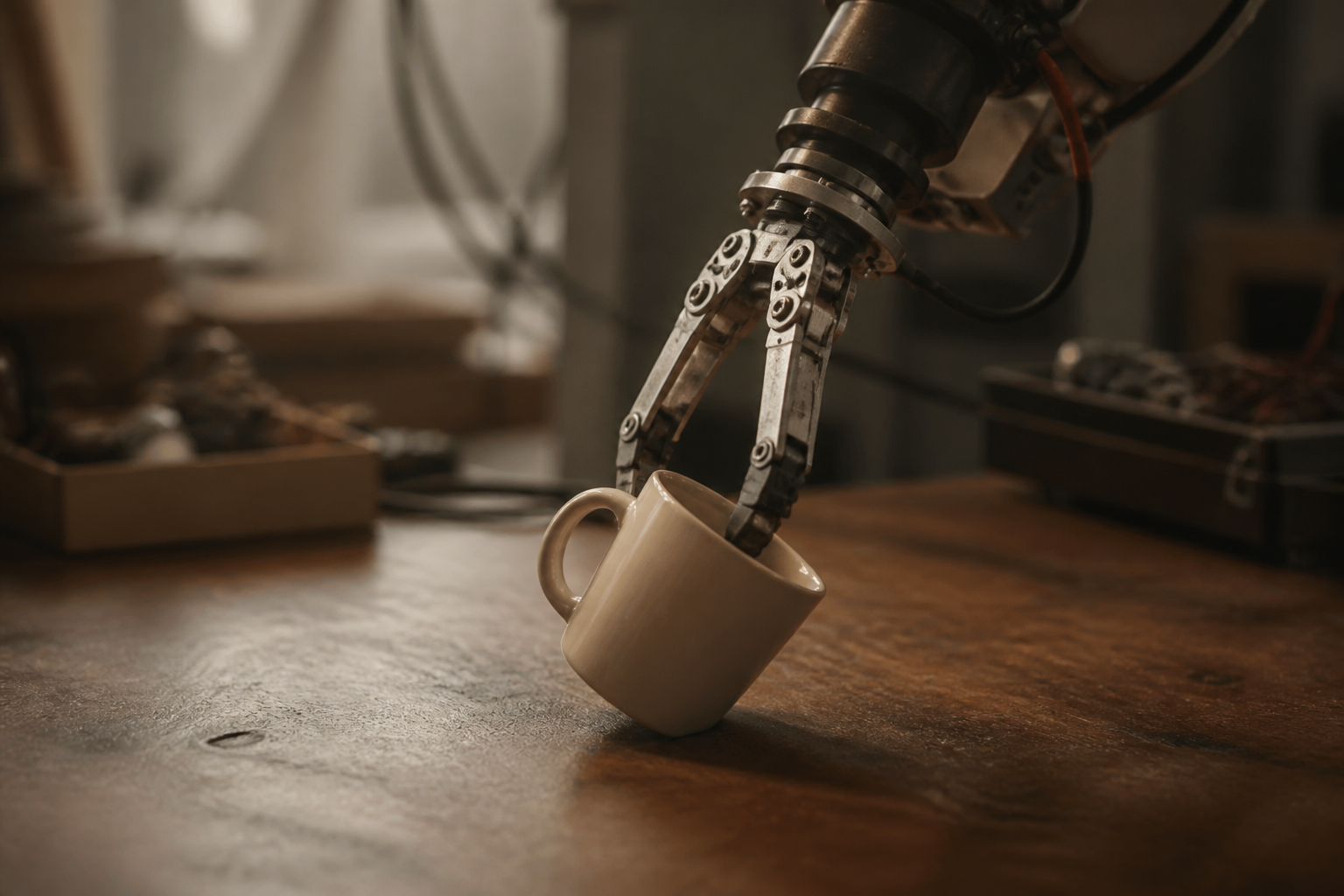

World Models Enable Physical Reasoning and Fault Recovery for Autonomous Robots
Robotics developers are deploying generative video systems to simulate physical actions and help machines recover from operational errors. By predicting joint movements and camera observations, models allow physical hardware to re-grab dropped items instead of halting execution. Startup Markov Robotics showed functioning control policies trained using approximately one hour of human demonstration footage.
The Blend
Robotics companies are adopting generative AI systems called world models to help physical machines reason through movement and recover from operational errors. According to claims made on the Markov Robotics website, these systems allow hardware like robotic arms and humanoids to predict real-world physics, letting them re-grab dropped items automatically rather than shutting down.
For everyday people, this represents a shift away from brittle automation toward adaptable machines. Traditional robots usually require rigid programming and halt completely when something goes wrong. By training models on just a few hours of human video, developers are enabling robots to learn hand movements and adjust to changing physical environments far faster than before.
However, significant questions remain regarding long-term safety and performance outside controlled tests. While training AI on short clips of human movement appears efficient, it is unclear if this limited data can prepare hardware for chaotic, real-world spaces like crowded kitchens or busy warehouses.
Written independently by AI News Smoothie from the reporting listed below. Facts belong to the original publishers. Follow the links for their full coverage.
Ingredients
- Markov Robotics
Markov Robotics claims its AI world model can train diverse physical robots to perform error-correcting actions using under five hours of human demonstration video.