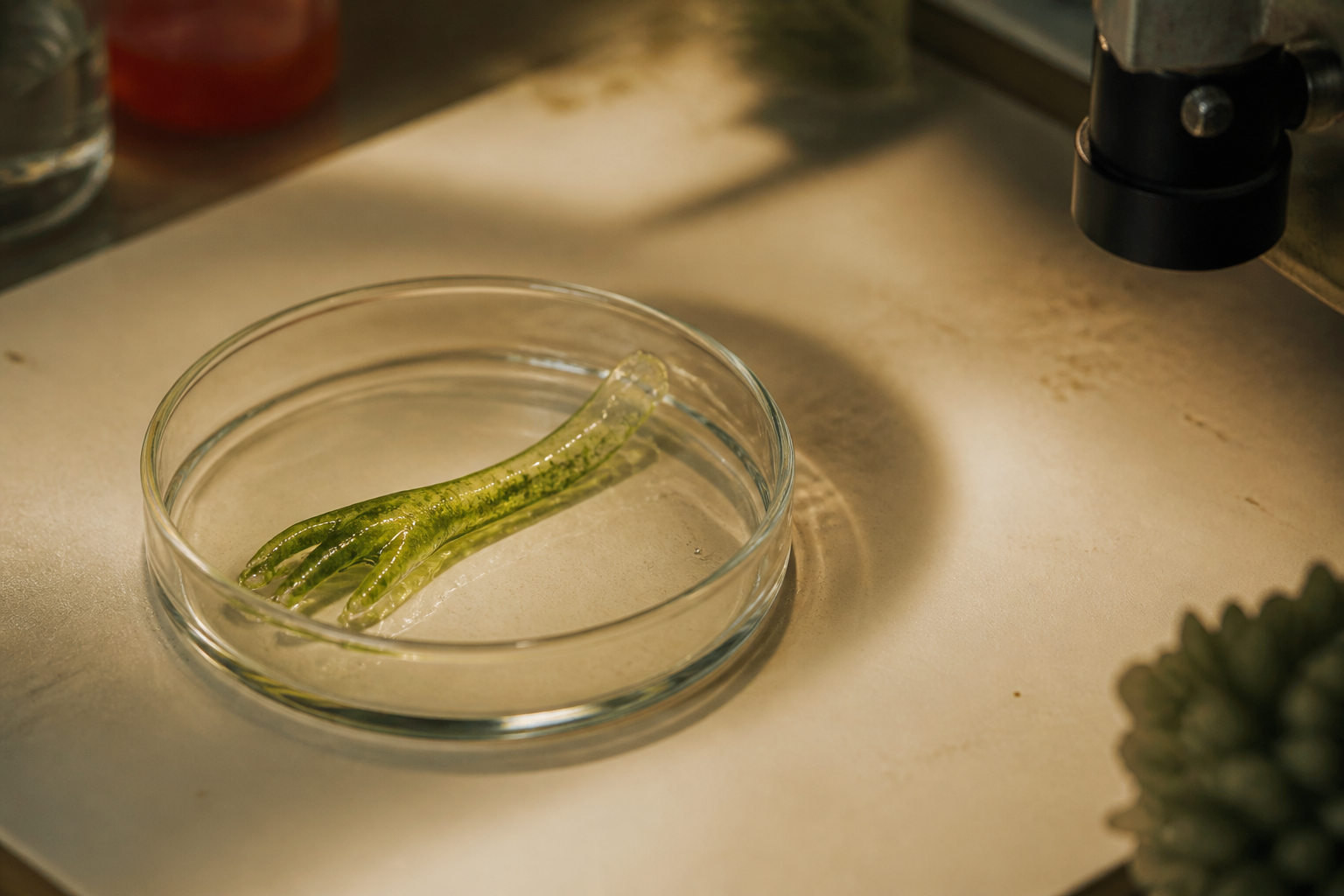
Scientists create bio-hybrid soft robotic arms powered by living algae
Researchers at Delft University of Technology developed micro robotic arms covered in living algae cells. When exposed to light, the algae trigger chemical shifts that flex the arm, offering a potential blueprint for low-power soft robotics in agriculture and underwater research.
The Blend
According to researchers at Delft University of Technology, engineers have built tiny, flexible robotic limbs that rely on living photosynthetic algae to move. Instead of using traditional electric motors, these bio-hybrid devices flex when exposed to light, which triggers internal chemical shifts within the biological layer.
This approach offers a practical look into machines that power themselves using ambient light and biological processes rather than heavy batteries or electrical cables. For everyday applications like harvesting delicate crops or conducting underwater environmental surveys, soft light-activated devices could work gently inside sensitive ecosystems without leaving behind electronic waste.
It is still unclear how well these algae-coated structures can endure harsh weather, unpredictable marine currents, or prolonged periods without adequate sunlight. Scaling up biological components also introduces novel maintenance challenges, raising the question of whether servicing future machinery might eventually look less like fixing electronics and more like caring for a plant.
Written independently by AI News Smoothie from the reporting listed below. Facts belong to the original publishers. Follow the links for their full coverage.
Ingredients
- https://www.youtube.com/shorts/rDz77sj_1BY
Delft University of Technology developed light-activated soft robotic arms powered by living algae to reduce reliance on conventional electricity.