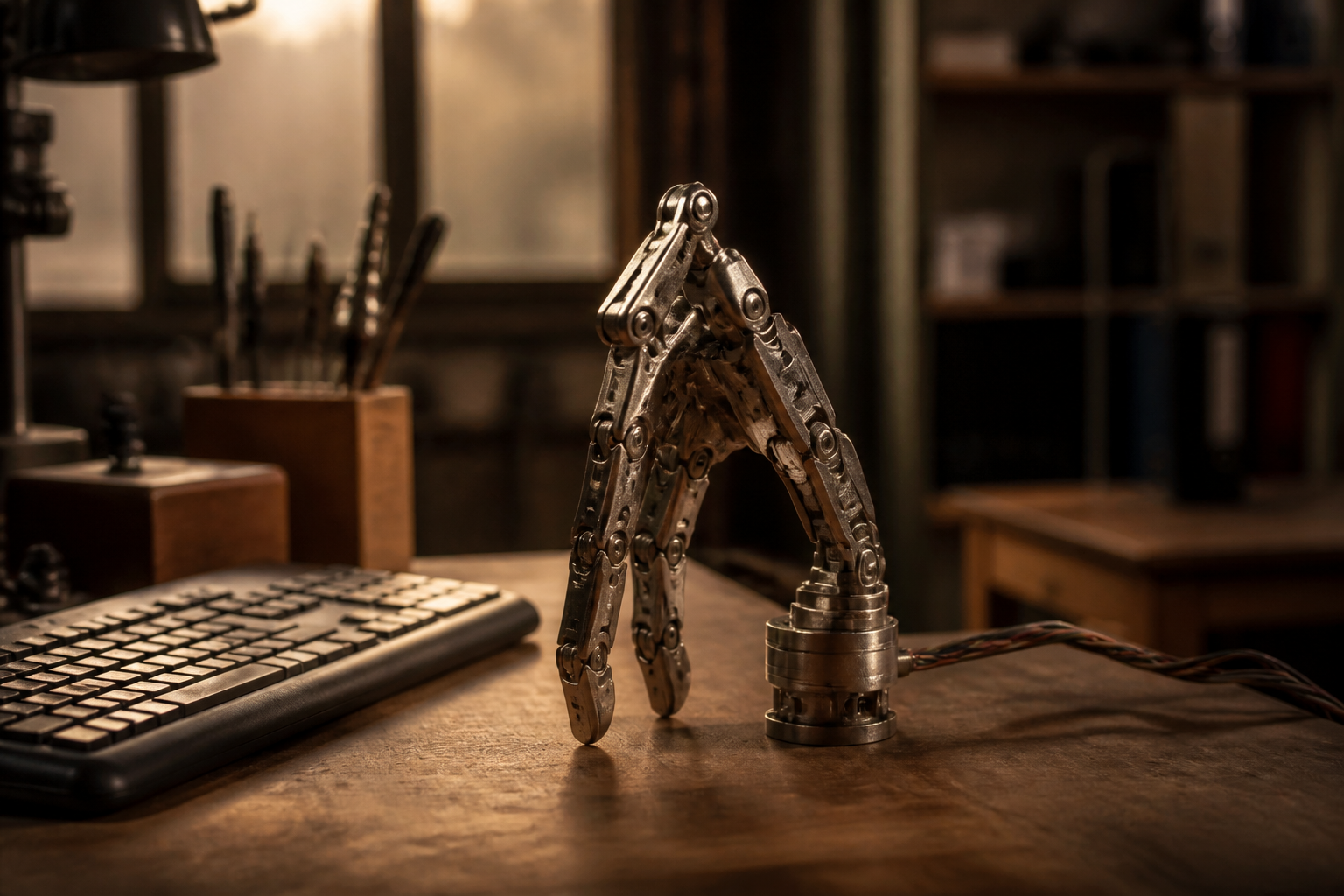
Researchers turn robotic hand into autonomous walking unit
Engineers at ETH Zurich modified a standard robotic hand with onboard computing, battery power, and motion sensors. Using machine learning techniques, the hand learned to walk on its fingertips across diverse surfaces and press keyboard controls.
The Blend
Robotics researchers at ETH Zurich have re-engineered a standard multi-fingered mechanical hand, enabling it to walk independently across different terrains. By equipping the device with internal processors, batteries, and movement sensors, the team used machine learning to teach the hand how to move on its fingertips without needing an attached robotic arm or external power tether.
For everyday people, this development signals a shift toward more flexible, adaptable robotics. Traditionally, mechanical hands are stationary tools meant only for gripping items while attached to a larger body. Giving a compact extremity its own mobility means future devices could navigate tight spaces, inspect hard-to-reach hardware, or interact with physical interfaces like keyboards without relying on bulky industrial rigs.
While the demonstration shows impressive coordination, it remains unclear how effectively these untethered limbs can perform heavy-duty tasks or operate over extended periods on limited battery power. A key open question is whether standalone robotic hands will remain specialized research novelties or eventually merge with modular software platforms to act as independent micro-rovers in home and industrial settings.
Written independently by AI News Smoothie from the reporting listed below. Facts belong to the original publishers. Follow the links for their full coverage.