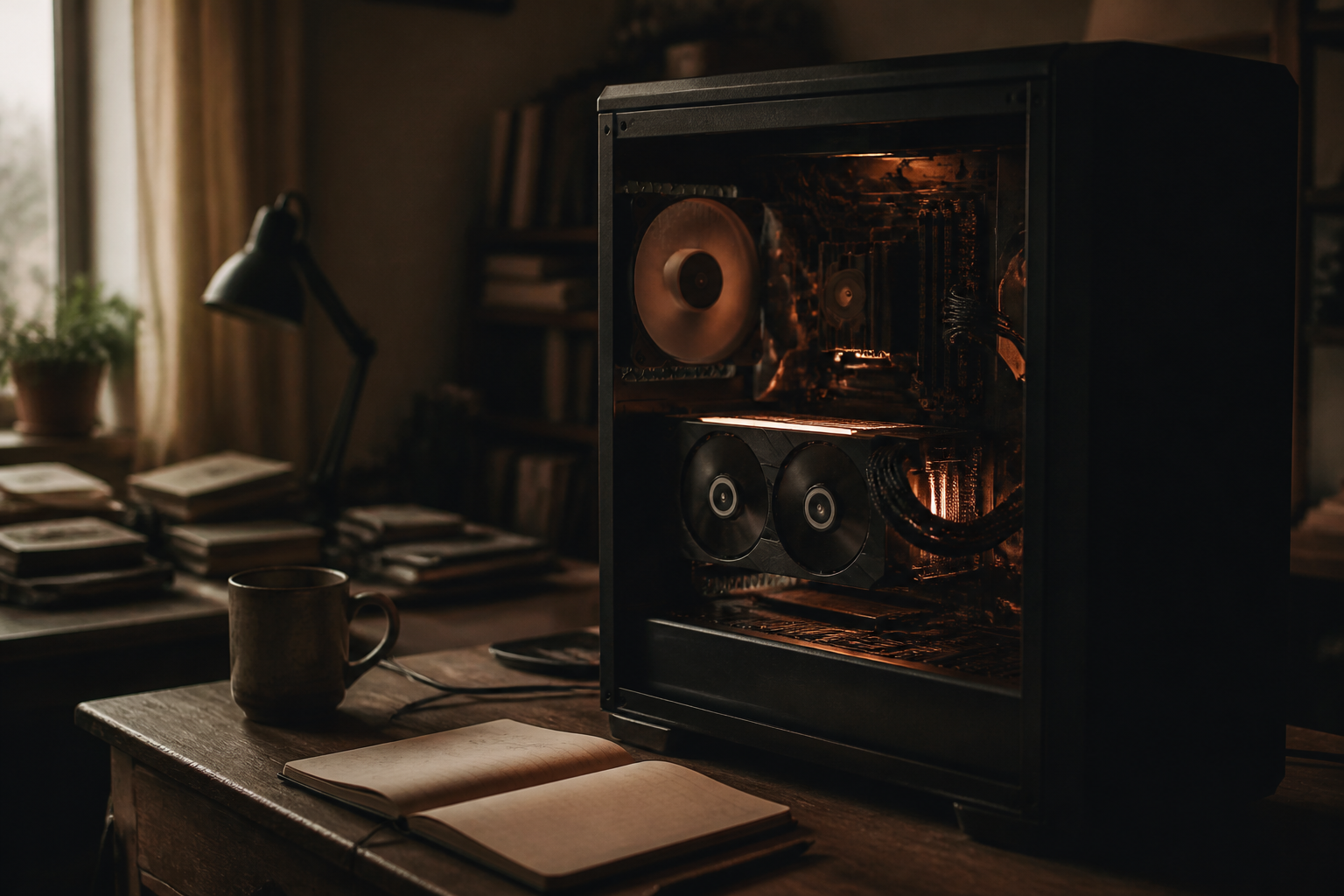
MiniMind provides instructions to train compact language systems at home
This open source learning repository explains how to train a small generative language model on consumer grade hardware in roughly two hours. It is suited for curious learners and software engineers who want hands on experience with fundamental machine learning workflows.
The Blend
A software project called MiniMind, shared on GitHub by developer jingyaogong, offers code and tutorials that let people build and train a tiny artificial intelligence model entirely from scratch. While flagship industry models demand sprawling server centers and astronomical budgets, this project outlines how to create a lightweight 64-million parameter system on standard consumer computer hardware in roughly two hours.
For everyday observers, the project matters because it pulls back the curtain on an often intimidating field. Dominant tech firms often treat generative systems as trade secrets, giving the public the impression that machine learning is out of reach for independent creators. By scaling down the entire training pipeline, the repository turns an opaque concept into a hands-on learning exercise, allowing curious students and programmers to see directly how raw text turns into automated responses.
At the same time, users should not expect a desktop replacement for services like ChatGPT. A model this small has very limited factual memory and will struggle with complex reasoning or nuanced dialogue. A key open question is whether these micro-training experiments will simply remain teaching toys, or if they could eventually pave the way for hyper-specialized local tools that run securely on low-power household devices.
Written independently by AI News Smoothie from the reporting listed below. Facts belong to the original publishers. Follow the links for their full coverage.
Ingredients
- GitHub - jingyaogong/minimind: 🧠 两小时从 0 训出你的 64M 大模型。Train your own 64M LLM from scratch in 2 hours. · GitHub
The open source MiniMind project offers code and guidance to train a miniature 64-million parameter language model on personal computer hardware in roughly two hours.