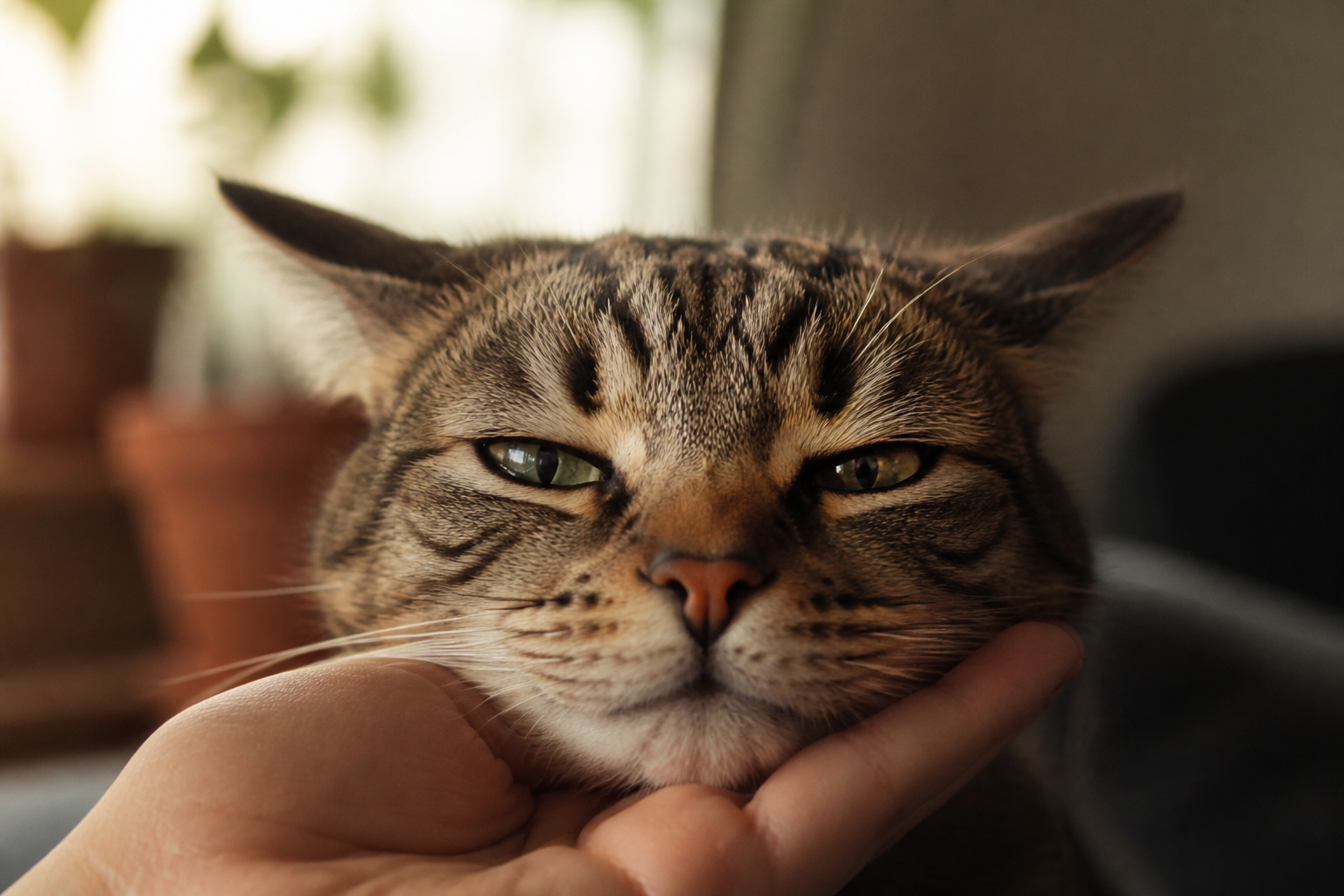
How to check if your cat is experiencing physical pain using facial expression scoring
Learn how to assess your cat for subtle signs of discomfort by applying the Feline Grimace Scale visual guidelines. This method allows pet owners to generate an objective rating to share with a veterinarian.
Try it yourself
- 1Observe your cat for 30 seconds while it is awake and resting quietly.
- 2Examine the ears to see if they turn outward or spread apart.
- 3Check if the eyes are squinting or tightly closed.
- 4Inspect the muzzle and whiskers to notice any flattening or forward positioning.
- 5Look at the head position to see if it drops below the shoulders.
- 6Assign a score of 0 for normal features, 1 for mild changes, or 2 for obvious signs, then add the numbers.
- 7Contact a veterinarian if the total score reaches 4 or higher out of 10.
The Blend
Researchers have created an artificial intelligence system that evaluates whether a cat is experiencing physical discomfort by examining its facial features. By evaluating subtle shifts in ear placement, eye tightness, and whisker position based on the Feline Grimace Scale, the software achieved a 95.5 percent accuracy rate in tests. According to a study published in Scientific Reports, the researchers specifically designed the underlying code to be small enough to run smoothly on standard smartphones.
Cats naturally hide signs of illness and injury, which often leaves pet owners unaware that their animal is suffering. An automated tool built into a mobile app could offer quick, unbiased feedback, helping owners decide when a trip to the veterinary clinic is necessary. It could also assist clinic staff by standardizing how animal pain is tracked over time.
However, recognizing pain from a single photograph presents practical limits. Real world images taken in dim living rooms or at awkward angles may not perform as well as the structured images used to train the software. Additionally, an unresolved question is whether widespread access to such diagnostic tools might lead some owners to delay professional care or try home remedies, rather than consulting a licensed veterinarian.
Written independently by AI News Smoothie from the reporting listed below. Facts belong to the original publishers. Follow the links for their full coverage.
Ingredients
- Fully automated deep learning models with smartphone applicability for prediction of pain using the Feline Grimace Scale | Scientific Reports
Scientists built a lightweight artificial intelligence model that can detect cat pain with high accuracy using facial images, paving the way for future smartphone apps.