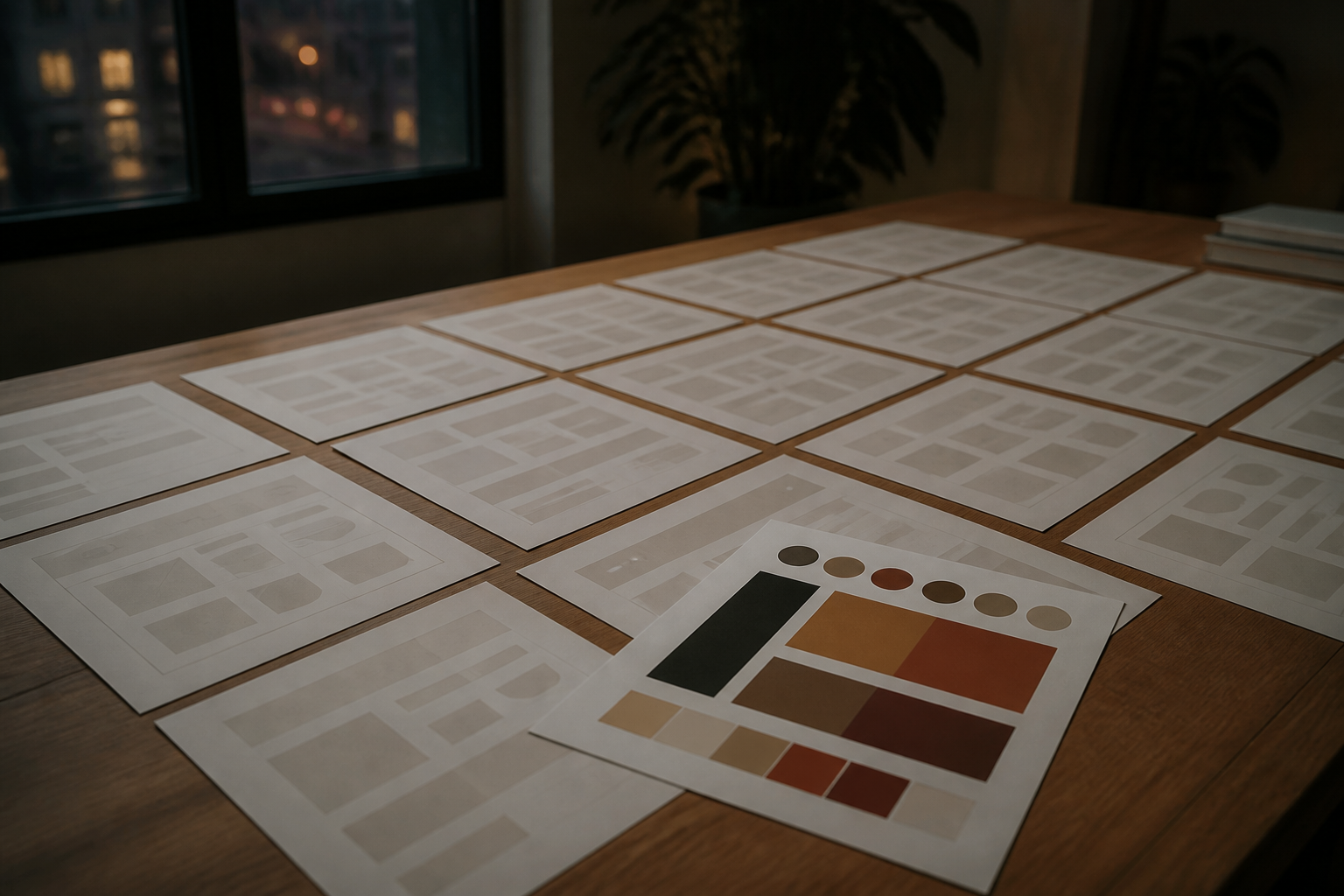
Generating distinct user interfaces using random string seeds
Standard language models tend to produce repetitive software layouts because they default to statistically predictable choices. Generating a random seed string with a script forces the agent to map visual themes to unique patterns, creating distinct visual choices every time.
Try it yourself
- 1Run a shell script to generate a long, random string of numbers and letters.
- 2Instruct the AI agent to define color, grid layout, and font rules based on the string.
- 3Direct the model to apply these derived design rules without rendering the seed string on screen.
Copy this prompt
Build a web landing page interface for [INSERT PRODUCT FUNCTION]. Execute this step-by-step workflow: run a shell script to create a long random alphanumeric string, define the creative direction including color palette, page layout, and typography based on that string, and build the page without displaying the seed string itself.
The Blend
Most software created by artificial intelligence tools ends up looking nearly identical. When asked to generate web pages or app interfaces, models like Claude tend to default to predictable layouts, such as familiar color gradients and side-by-side text with graphics. Former Apple design manager Anshu Chimala explained in an article for Lenny's Newsletter that this repetition occurs because AI models select the safest, most statistically probable choices based on their training.
To break these tools out of their habits, Chimala recommends feeding random text strings into the prompt as a creative seed string. By forcing the software to connect visual themes with unexpected text patterns, creators can push the system away from standard templates. This simple approach encourages the underlying models to generate distinct visual layouts, novel color schemes, and varied user interfaces during every attempt.
For average internet users, this technique could eventually eliminate the cookie-cutter design style currently dominating AI-generated tools. However, it remains unclear whether fully randomized prompts can reliably yield practical, user-friendly interfaces without heavy human supervision. A lingering question is whether injecting randomness actually sparks genuine creativity, or if it simply replaces predictable design defaults with chaotic ones.
Written independently by AI News Smoothie from the reporting listed below. Facts belong to the original publishers. Follow the links for their full coverage.
Ingredients
- How to turn your AI into a world-class designer
Using random seed strings in prompts forces AI models to break away from generic, predictable software layouts.