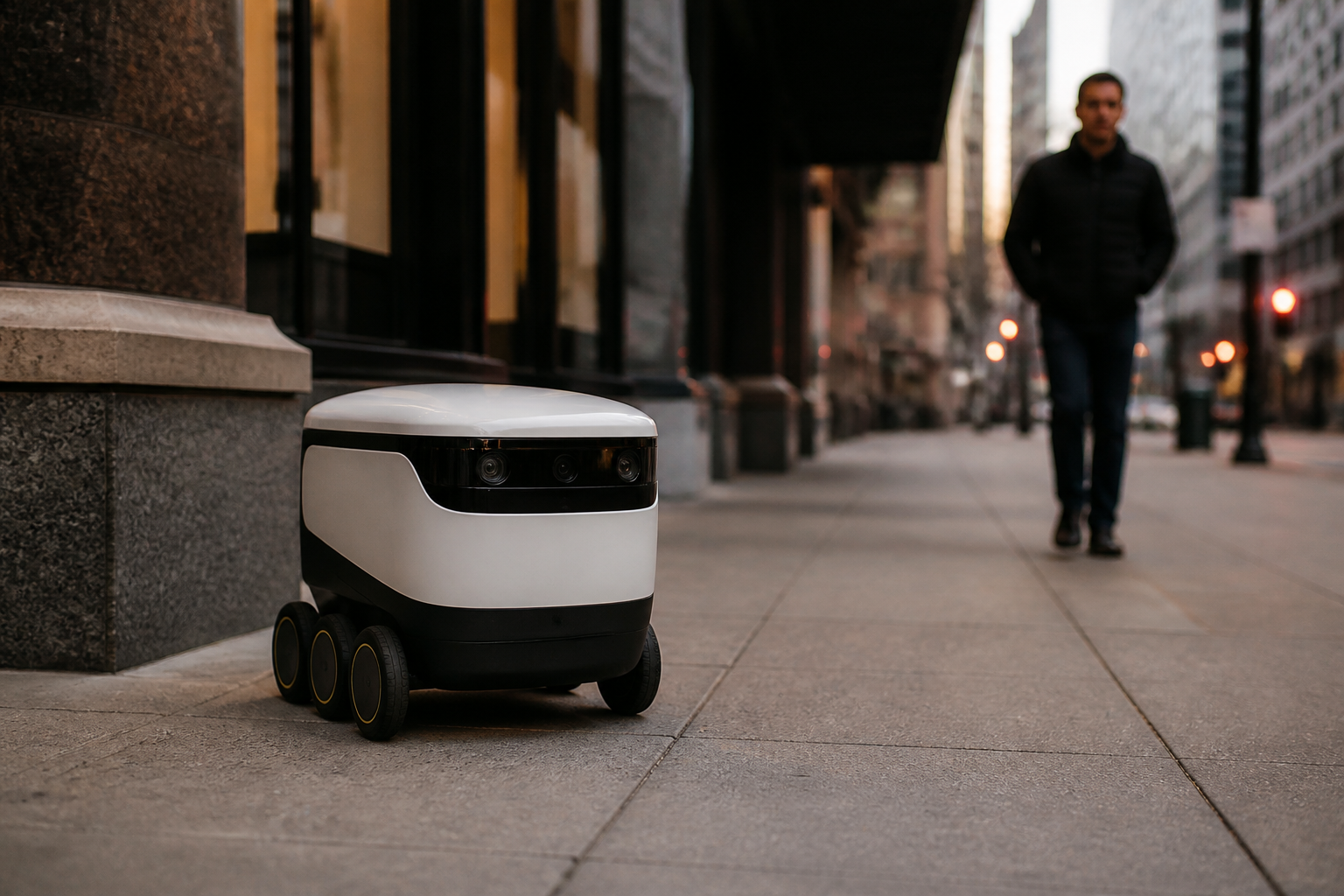
Delivery Robot Companies Face Class Action Lawsuits Over Data Collection
Two Chicago residents filed lawsuits accusing sidewalk delivery startups Coco Robotics and Serve Robotics of scanning pedestrian biometric data without permission. The complaints allege that camera systems gathered face and hand details to sell for machine learning development, which both companies deny.
The Blend
Two delivery robot companies, Coco Robotics and Serve Robotics, are facing separate class action lawsuits in Chicago over how their sidewalk units gather visual information. As reported by Mashable, the legal complaints claim that the autonomous devices used cameras and laser sensors to record detailed physical measurements of human faces and hands. The lawsuits allege that these scans were tied to customer identities and sold to tech firms for artificial intelligence training without consumer approval.
For everyday consumers, the case highlights a growing friction between automated convenience and personal privacy. People ordering food online through common apps often do not get a choice in whether a human or a machine brings their meal. If sidewalk robots are quietly capturing biometric traits from anyone who walks up to retrieve a package, standard daily errands could turn into unconsented data harvesting points.
Both startups strongly reject the allegations. A spokesperson for Coco Robotics told Mashable that the lawsuit misinterprets how their systems work and denied taking biometric measurements in Chicago, while Serve Robotics stated its sensors only handle navigation rather than personal identification. It remains uncertain how courts will evaluate visual navigation data against strict state privacy laws, or whether app users implicitly agree to tech monitoring when placing an order.
This dispute raises broader questions about where the line sits between essential obstacle detection for self driving machines and unlawful surveillance. If robotic fleets require high resolution imagery to safely navigate public sidewalks, future regulations will need to clarify how long that spatial footage can be stored before it crosses into privacy violations.
Written independently by AI News Smoothie from the reporting listed below. Facts belong to the original publishers. Follow the links for their full coverage.
Ingredients
- Delivery robots face lawsuit for allegedly scanning faces of customers, collecting data | Mashable
Delivery robot firms Coco Robotics and Serve Robotics are facing legal action in Chicago over claims that their sidewalk machines secretly collect human biometric data to train AI models.