
Data gathering practices linked to scanning and destroying rare physical books
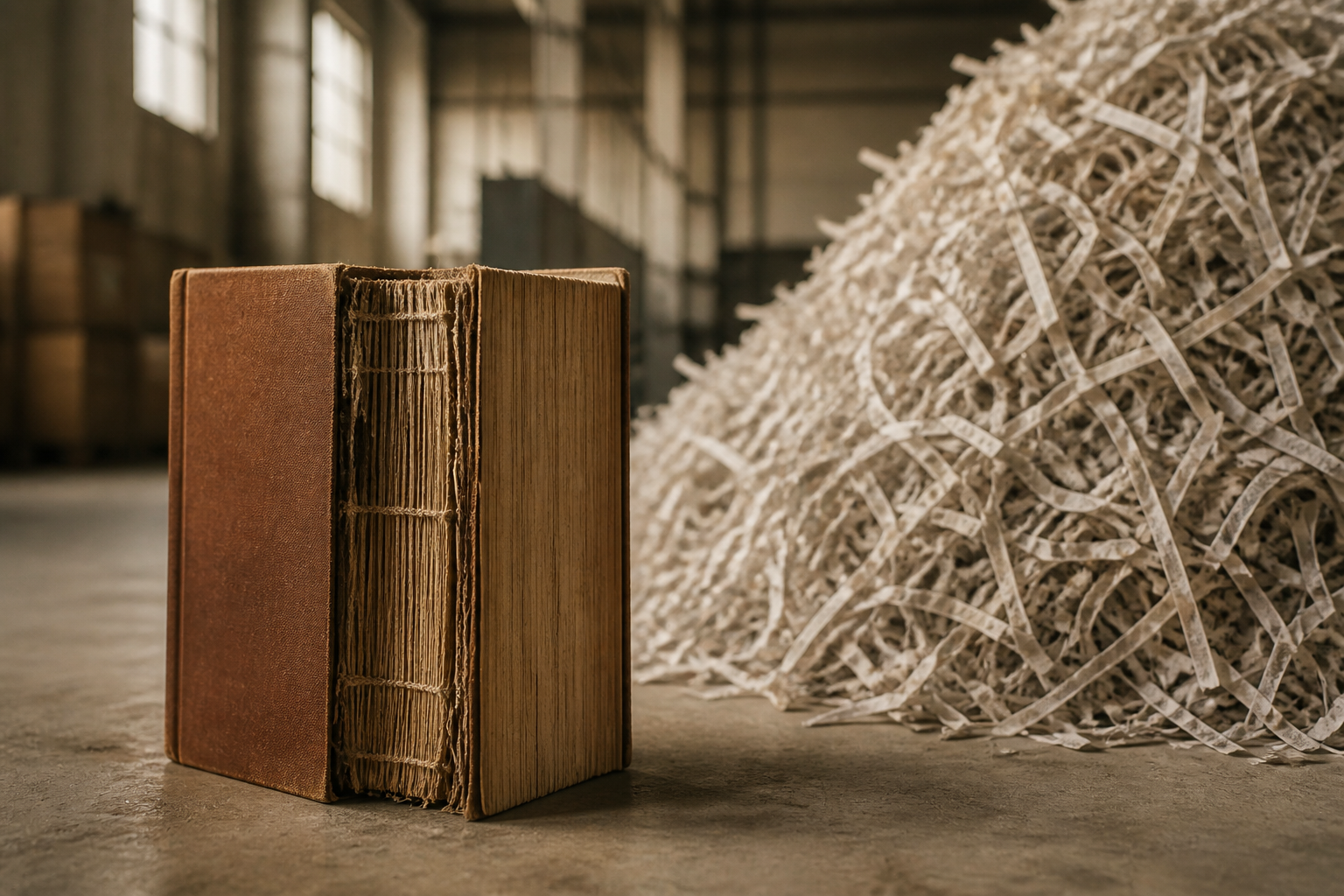
An investigation found that organizations are acquiring uncommon physical books to scan them into AI training datasets before shredding the original paper copies. Tracking devices planted inside targeted books helped trace the destroyed volumes back to facilities linked to major tech companies.
The Blend
A report from news outlet 404 Media, featured on CBS News, uncovered a hidden supply chain in the artificial intelligence industry: organizations purchasing physical books, digitizing their pages, and subsequently shredding the paper copies. To trace where these shipments were heading, investigators placed a hidden tracking device inside a volume sold through secondhand channels, following its path directly to a processing facility tied to major technology operations.
For the general public, this strategy underscores the relentless demand for fresh text to feed machine learning models. Because vast portions of the digital web have already been harvested, data collection firms are turning to printed literature, particularly uncommon or out-of-print titles. Completely destroying physical copies to speed up high-volume scanning threatens to erase unique pieces of literary history that may not exist anywhere else.
It remains unclear which specific technology corporations are directly financing these bulk purchases, or how many rare manuscripts have been destroyed so far. Looking ahead, this practice raises a serious cultural dilemma: if a private enterprise buys and destroys the last remaining paper copy of an obscure text, it effectively turns shared human heritage into exclusive corporate training data without public oversight.
Written independently by AI News Smoothie from the reporting listed below. Facts belong to the original publishers. Follow the links for their full coverage.
Ingredients
- AI companies buying books to scan and destroy, 404 Media investigation finds - CBS News
An investigation revealed that tech-linked entities are purchasing physical books, scanning their text for AI training sets, and shredding the original paper copies.