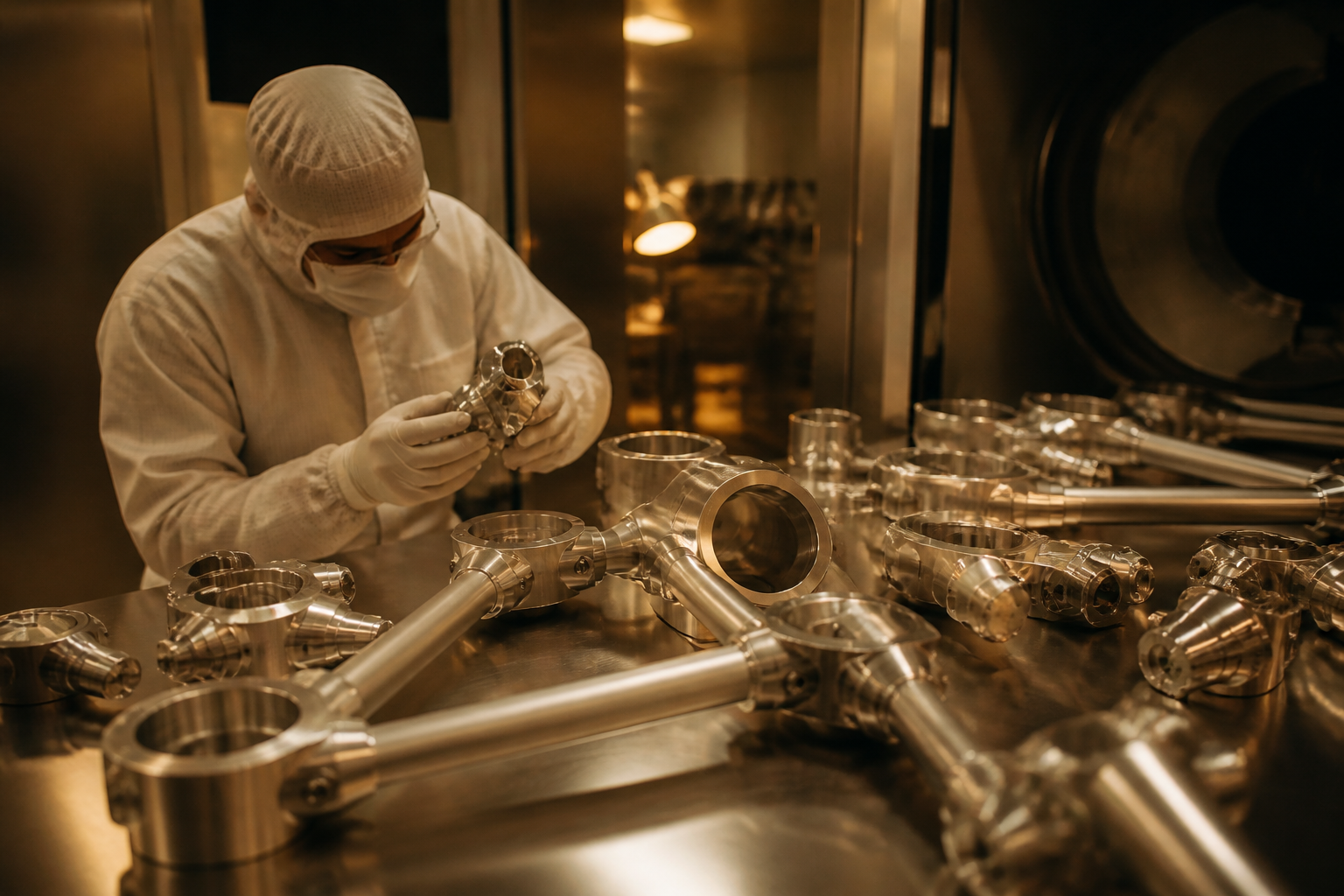

Caltech robot constructs structural framework in space without human help
Caltech researchers successfully demonstrated an autonomous robotic arm assembling structural components in low Earth orbit. Known as ASTRA, the system paves the way for building massive space telescopes and orbital power grids without requiring human spaceflights.
The Blend
Engineers from Caltech, supported by DARPA, have demonstrated a robotic system capable of assembling structural hardware directly in orbit without live human control. The experimental payload, named ASTRA, deployed a mechanical arm to retrieve parts from onboard dispensers and piece them together in space, completing a section of a framework designed for a reflector antenna.
This accomplishment points toward a future where giant orbital infrastructure can be built directly in space rather than on the ground. Today, scientific instruments like space telescopes and solar collectors are strictly constrained by the physical capacity of rocket fairings. Autonomous construction arms offer a way around those limits, potentially allowing humanity to assemble massive space stations and giant deep-space observation platforms that are far too large to fit on a single rocket launch.
While this early flight test proved that automated arms can connect basic joints in zero gravity, scaling up the process brings major technical questions. It is still unclear how effectively these autonomous tools can diagnose assembly errors, withstand harsh temperature swings, or navigate collisions with space debris during longer builds. Future missions will have to prove whether self-building systems can reliably repair their own mechanical mistakes without astronaut intervention.
Written independently by AI News Smoothie from the reporting listed below. Facts belong to the original publishers. Follow the links for their full coverage.
Ingredients
- US robot builds space structure without human assistance for first time
Caltech and DARPA successfully demonstrated an autonomous robot assembling structural framework components in low Earth orbit without human aid.